


Specialist paediatric and strabismus eye care in Sydney

Early assessment and tailored treatment may help support healthy eye alignment and visual development throughout childhood

Specialist paediatric and strabismus eye care in Sydney

Early assessment and tailored treatment may help support healthy eye alignment and visual development throughout childhood

With early care, children may develop stronger vision and better eye coordination

Learn how our team assesses and manages paediatric eye conditions and strabismus to support confident seeing and long-term visual development
  • Paediatric eye conditions affect how a child’s eyes develop and function.
  • Because the connection between the eyes and the brain is still forming, early identification is important.
  • Two of the most common concerns are amblyopia (lazy eye) and strabismus (squint).
  • Amblyopia or ‘lazy eye’ is inability for an eye to see clearly even if the best glasses are worn, due to a problem in development of the nerves from the eye to the brain; it is the commonest cause of poor vision in childhood.
  • For normal visual development to occur, one must be neurologically normal, have two structurally normal eyes, and receive clear visual stimulation to develop the nerve fibres from each eye to the brain equally. We are not born with all the nerve connections for vision, and fibres of different types carry the various components of our sight. The two eyes compete with each other for these neural connections; if one has better vision, more connections form with the brain from this eye, at the expense of the other eye. If neither have clear visual stimulation; fibres for smaller print do not form with either eye.
  • An amblyopic eye has poor vision (despite wearing the best possible glasses) because the best potential vision did not develop, and the nerve fibres for clearer vision do not exist for that eye.
  • Treatment to improve the vision in an eye which is amblyopic, is usually effective until between 6- 8 years of age and can include a combination of glasses, patching or Atropine drops. The sooner treatment is started the better the chance of attaining the best visual potential. The following are treatment regimens used to treat amblyopia:
  • Patching:
    • Patching aims to improve the vision in the amblyopic eye by covering the eye with the better vision.
  • Atropine drops:
    • Atropine drops are sometimes used as an alternative to patching. They blur the sight in the better eye to encourage the weaker eye to work.
  • Prognosis
    • Treatment of Amblyopia, such as wearing a patch is most effective at a young age. By the age of approximately 6-8 years of age, the eyes are fully developed and treatment is most successful if treated before this age.
  • A squint is the term used to describe when an eye is turned in, turned out, or higher than the other eye. The squint may be present all or only part of the time and may appear to affect only one eye or alternate between the eyes.
  • Normally when looking at an object in the distance the eyes are looking straight ahead, when one eye is turned, it is described as a squint.

Symptoms of Strabismus

  • The most obvious sign of a squint is one eye that does not look straight ahead but turns inwards, outwards, upwards or downwards. However, small squints may be less obvious.
  • If a squint is left untreated, lazy eye (amblyopia) can develop. The vision in the affected eye gradually deteriorates because the brain ignores the weaker message being sent from that eye. It is not usually possible to correct amblyopia after the age of about 7 years, which is why it is so important to treat a squint as soon as possible
  • There are 2 main components when treating a child with a squint:
    • Correcting the misalignment
    • Treating any amblyopia to ensure normal visual development

Why do people develop squints?

The incidence of squints in the population is 2-4%.

Squints can be due to:

  • The effort required to focus the eyes;
  • It can run in families
  • Illness or being tired can make it more obvious
  • Structurally abnormal eye
  • Injury
  • Rarely, it can be due to other diseases or illnesses.

You should always seek an expert opinion if you are concerned. If you feel it is persisting despite reassurance, ask for another assessment.

  • In some children this involves glasses, in others strabismus surgery is the best option for your child. This will depend on the type of strabismus that your child has, and whether it is turned in (esotropia) or turned out (exotropia).
  • There are other important factors that are part of the decision making process. This includes how frequently your child’s eye is turned – all the time (constant) or intermittently.
  • Other factors that help Dr Shanel Sharma determine if strabismus surgery is the best option for your child is whether the strabismus responds to glasses.
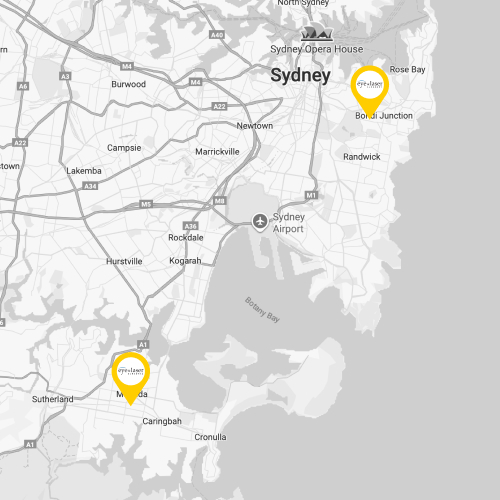
  • Dr Shanel Sharma and our team will discuss this with you further during your consultation in either our Miranda (02 9531 5300) or Bondi Junction (02 9387 5300) offices.
  • Squint is the common name for ‘strabismus’ which is the medical term used to describe eyes that are not pointing in the same direction. A squint can be convergent (esotropia), divergent (exotropia) or vertical. The squint may be present all or only part of the time, in only one eye or alternating between the two eyes.
  • It has been estimated that four in every 100 adults suffer from strabismus. Commonly an eye that was straight after childhood squint surgery later drifts in the opposite direction and causes concern over its appearance.
  • Sometimes a squint develops due to an underlying health issue, such as damage to cranial nerves, following head injury or as a complication of diabetes, stroke, or thyroid eye disease. Therefore, Dr Shanel Sharma may ask you to have some additional tests to exclude an underlying cause.

Symptoms of Squint

  • Symptoms of adult squint problems include fatigue, double vision, difficulty with near vision and loss of depth perception. To compensate for this, some individuals will adopt an abnormal head position.
  • The appearance of an eye turn (strabismus / squint) can have considerable impact on one’s social relationships and work, for example a teacher in a classroom or someone who does public speaking.
  • Some studies have demonstrated that people with a turn are perceived as less trustworthy, humorous and reliable due to the appearance of a squint.
  • You are not alone if you feel prejudice towards you, please contact our rooms and make an appointment to see Dr Shanel Sharma in either our Bondi Junction (02) 9387 5300 or Miranda Rooms (02) 9531 5300.

Causes of Squint

  • Squints that have been corrected during childhood often recur in adulthood. Different squints may cause double vision as the brain has been trained to collect images from both eyes.
  • If you develop a new squint suddenly, you need to be seen urgently.

Treatment and recovery

  • Treatments of squint depend upon the cause, the degree and direction of misalignment, how long the squint has been present, and any previous treatment that has been received.
  • Treatment may involve glasses with or without occlusion, prisms, or contact lenses; Botox for strabismus, squint surgery, exercises or a combination of any of the above.
  • Botulinum Toxin is commonly known as a cosmetic anti-wrinkle injection, however, it also has uses in treating medical conditions. It has a powerful effect in weakening muscles on a temporary basis.
  • To treat squint, Botox is injected into the eye muscle under guidance from an electrical probe to detect that the needle is correctly located in the muscle.
  • This is a treatment that has been done at Moorfields Eye Hospital in London since 1982, with over 1300 injections of botulium toxin given annually into the eye muscles to help in attaining ocular alignment. It has been used repeatedly in some patients, and others are able to regain alignment for prolonged periods with one botulinum toxin injection.
  • If you would like to be assessed to determine if this treatment is an option for you, make an appointment with Dr Shanel Sharma who trained to do botulinum injections for strabismus at Moorfields Eye Hospital in London. Appointments can be made in either the Miranda rooms on (02) 9531 5300 or (02) 9387 5300 for the Bondi Junction offices.
  • This treatment can often be an option for patients who have failed other treatment options such as strabismus / squint surgery or prisms.

GAIN VISUAL FREEDOM IN 3 EASY STEPS

Eye treatment options can be confusing, we’ve made the path to healthier vision easy to follow

STEP 1: GET IN TOUCH

Every eye is different. The first step is to find out which treatment could help you see more clearly and protect your long-term vision. Call our caring team or use our online calendar to book an appointment.
STEP 2: WE’LL MEET

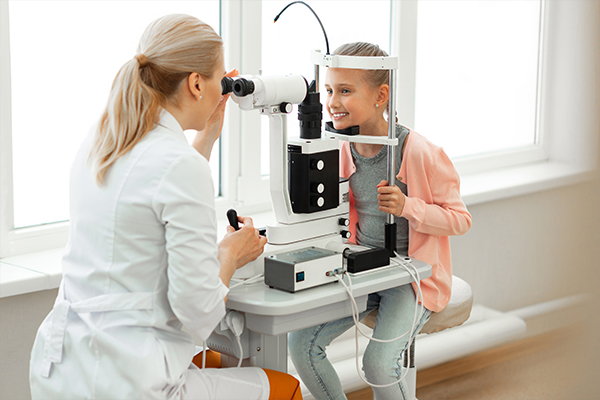
During your appointment, we’ll examine your eyes and explain which treatment options may suit your condition and lifestyle. You’ll receive expert advice and a clear, personalised plan.

STEP 3: ENJOY FREEDOM

After treatment, many people feel relief knowing their eyes are healthier and their sight is clearer. With proper care, you can look forward to years of confident, comfortable vision.


Take the first step toward clearer, healthier vision

Book an appointment to learn more about your eyes and the treatment options that may suit you

Take the first step toward clearer, healthier vision

Book an appointment to learn more about your eyes and the treatment options that may suit you

Hi, I’m Dr Daya Sharma

I’m a cataract, corneal and refractive surgeon with subspecialty training from Moorfields Eye Hospital in London and Sydney Eye Hospital. I perform laser vision correction procedures, refractive lens surgery, and advanced cataract surgery using the latest diagnostic and surgical technology. My work is focused on helping people reduce their dependence on glasses and improve their quality of vision at all distances. I’m actively involved in research, publication and surgical education, and I take pride in offering honest, thorough guidance to every patient. My approach is personal, careful and always tailored to individual needs and lifestyles.

Hi, I’m Dr Shanel Sharma

I’m an ophthalmologist with subspecialty training in paediatric eye conditions, strabismus, medical retina and general ophthalmology from leading hospitals in Sydney and London, including Moorfields Eye Hospital. I hold a Fellowship with RANZCO and have published widely in peer-reviewed journals. My focus is providing careful, individualised care using evidence-based treatments. I’m accredited to treat a range of conditions and perform procedures including intravitreal injections, strabismus surgery and botulinum toxin treatments. I always aim to make the process clear, calm and supportive.