

Cataract Surgery: What to Expect
By Dr Daya Sharma – Eye & Laser Surgeons Sydney
Cataract surgery restores vision by replacing the cloudy natural lens of the eye with a clear artificial intraocular lens (IOL). Cataract surgery is a safe and effective treatment for blurred vision caused by cataracts.
Modern cataract surgery can also correct focusing errors. Advanced lens options such as extended-depth-of-focus lenses and multifocal lenses can reduce dependence on glasses and improve vision for everyday activities such as driving, using a computer and reading.
Cataracts are one of the most common causes of blurred vision, particularly in people over the age of 50. Cataract surgery is therefore one of the most commonly performed surgical procedures in ophthalmology. Many patients research cataract surgery before their consultation so they understand the procedure, lens options and recovery process.
I am an ophthalmologist and cataract surgeon at Eye & Laser Surgeons in Sydney. In this article, I explain how cataracts develop, the symptoms patients often notice, and what to expect when considering cataract surgery in Sydney.
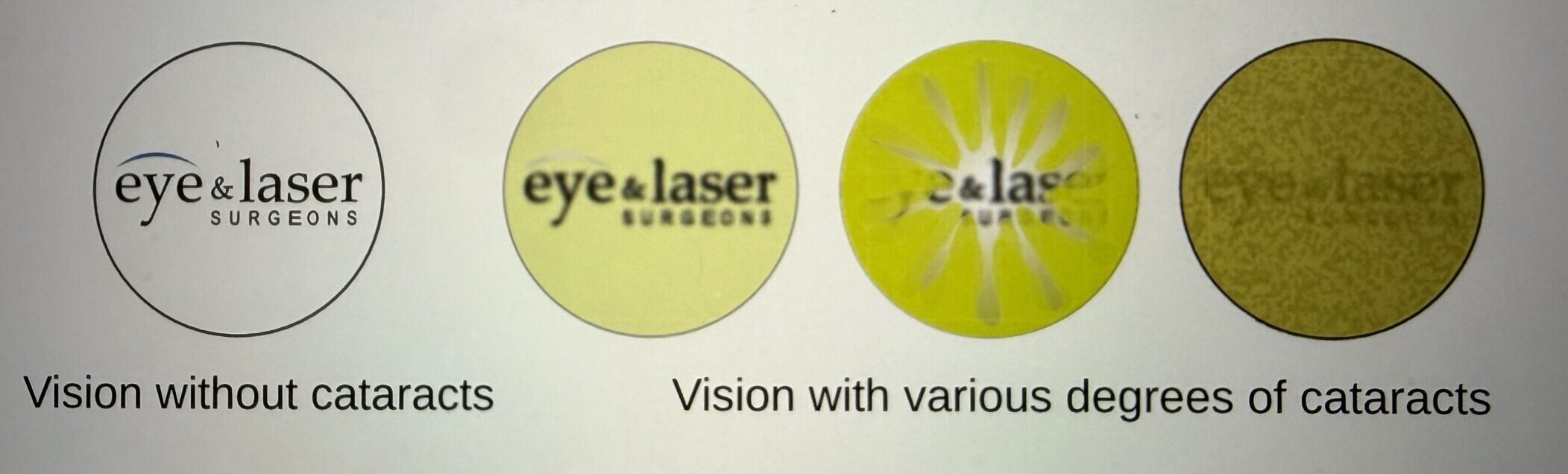
Illustration showing the progression of cataracts as the natural lens of the eye becomes increasingly cloudy, causing blurred vision.
What Is a Cataract?
A cataract occurs when the natural lens of the eye becomes cloudy.
The lens normally focuses light onto the retina so we can see clearly. When the lens becomes cloudy, light scatters as it enters the eye. Vision gradually becomes blurred and dim. Many people also notice glare from lights, particularly from oncoming headlights at night.
Age-related cataracts develop as the natural lens changes over time. Almost everyone will eventually develop some degree of cataract. Age-related cataracts usually progress slowly, so people often adapt to gradually worsening vision.
Some cataracts develop earlier or progress more quickly. This may occur after eye trauma, significant ultraviolet (UV) exposure, diabetes, or long-term steroid medications such as prednisone.
Early Symptoms of Cataracts
Cataracts often cause gradual changes in vision.
Common symptoms include:
• blurred or cloudy vision
• increased glare from lights or headlights
• difficulty driving at night
• colours appearing faded or dull
• needing brighter light for reading
• frequent changes in glasses prescription
Many people first notice cataracts when everyday tasks such as reading, driving or recognising faces become more difficult.
When Is Cataract Surgery Recommended?
I usually recommend cataract surgery when vision problems begin to interfere with daily activities.
For example, patients may experience:
• reduced confidence when driving, especially at night
• difficulty recognising faces
• difficulty reading especially in dim conditions
• problems performing hobbies or work tasks
During your consultation, I examine the eyes carefully to assess the cataract and evaluate the overall health of the eye. We then discuss how your vision affects your daily activities.
The decision to proceed with cataract surgery depends on your lifestyle, visual goals and the severity of the cataract. Most patients recognise changes in their vision long before they fall below the legal driving standard.
Research also suggests that cataract surgery reduces the risk of falls, fractures, and motor vehicle accidents in older adults.
How Cataract Surgery Works: The Procedure Explained
Cataract surgery removes the cloudy natural lens and replaces it with a clear artificial intraocular lens (IOL).
The procedure usually takes 10–30 minutes.
I perform cataract surgery with a highly experienced surgical team. Our goal is to keep patients comfortable and relaxed throughout the procedure.
Most patients remain awake but relaxed with light sedation. Local anaesthetic keeps the eye numb during surgery. The procedure takes place in a specialised day-surgery facility, and patients return home the same day.
Some patients benefit from a general anaesthetic. For example, people with severe anxiety or uncontrollable head tremors may find the procedure easier under general anaesthesia.
Types of Lens Implants Used in Cataract Surgery
During cataract surgery, I replace the natural lens with an artificial intraocular lens (IOL). Several lens designs are available, and each offers different visual advantages.
The best lens choice depends on your eye measurements, lifestyle and visual priorities.
Monofocal lenses
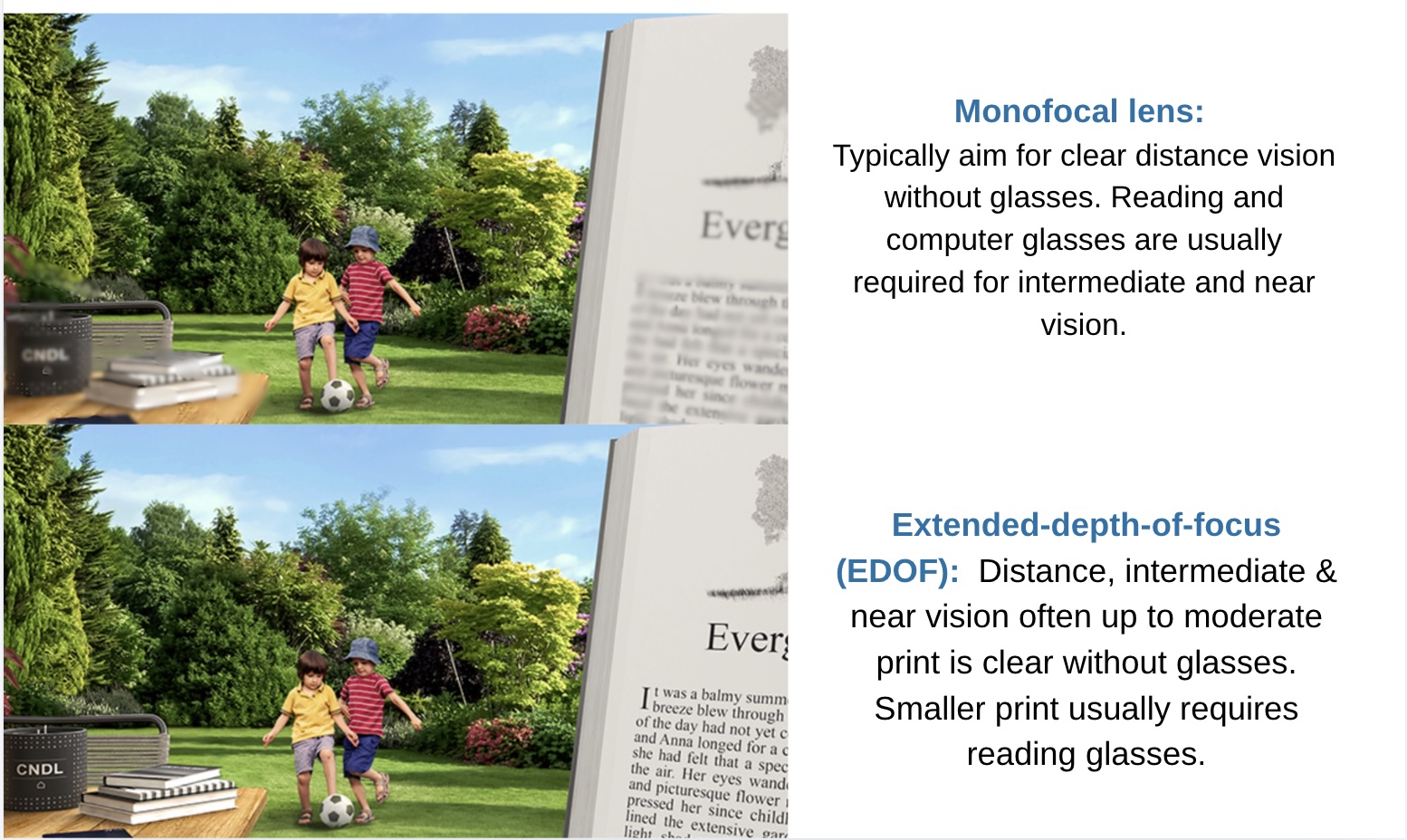
Monofocal lenses focus light at a single distance. They usually provide excellent distance vision but usually require glasses for computer and reading.
Enhanced monofocal lenses (Monofocal plus)
Enhanced monofocal lenses extend the range of focus slightly. They often provide good distance vision with improved intermediate vision while maintaining excellent visual quality.
Extended depth-of-focus lenses
Extended depth-of-focus lenses provide a continuous range of vision. Many patients achieve good distance and computer vision without glasses and may only require glasses for small print.
 Multifocal lenses
Multifocal lenses aim to maximise spectacle independence for both distance and near vision. However, patients are more likely to notice glare or halos around lights at night.
Toric lenses
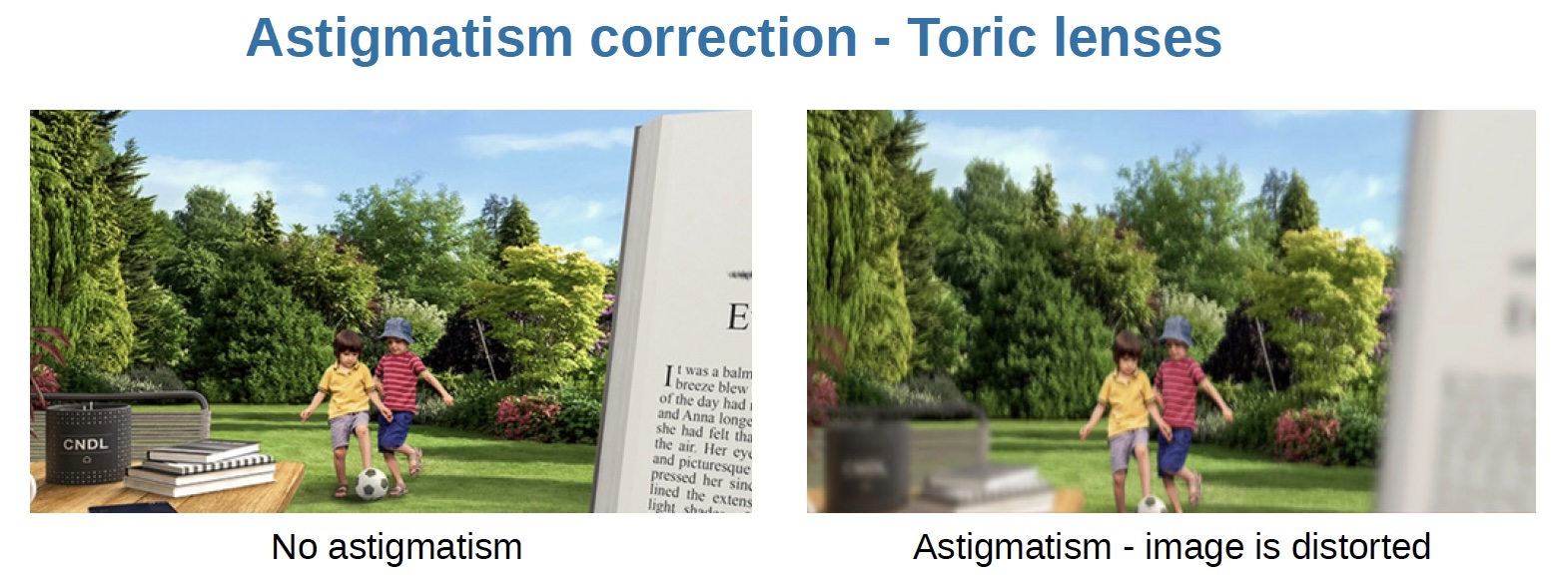
Toric lenses correct astigmatism. Astigmatism occurs when the cornea is shaped more like a rugby ball rather than a soccer ball. Light focuses at different planes, causing blurred and distorted vision.
Correcting astigmatism during cataract surgery often improves visual clarity significantly.
 During your consultation, I explain the available lens options and help you choose the most appropriate lens for your visual goals.
Recovery After Cataract Surgery
Most patients notice an improvement in vision within the first few days after cataract surgery.
However, the eye may take several weeks to fully stabilise.
During recovery, I advise patients to:
• use prescribed eye drops
• avoid rubbing the eye
• avoid swimming for a short period
• attend follow-up appointments
Most people return to normal daily activities within a few days.
Most patients notice improvement in vision within the first few days after cataract surgery.
Benefits of Cataract Surgery
Cataract surgery improves vision by removing the cloudy lens and restoring clear optical focus.
Patients commonly notice:
• sharper vision
• brighter colours
• reduced glare
• improved reading and driving vision
The final visual result depends on the overall health of the retina and other parts of the eye.
Cataract Assessment in Sydney
Cataract surgery requires careful planning and precise measurements.
At Eye & Laser Surgeons in Sydney, we perform a comprehensive eye examination before recommending cataract surgery. These tests help us assess the cataract and determine the most appropriate treatment plan.
Dr Shanel Sharma and I (Dr Daya Sharma) are specialist ophthalmologists who diagnose and manage cataracts and other eye conditions.
Frequently Asked Questions
How long does cataract surgery take?
The procedure usually takes 10–30 minutes, and patients return home the same day.
Is cataract surgery painful?
I perform cataract surgery using local anaesthetic and light sedation. Most patients experience little or no discomfort.
Can cataracts come back after surgery?
Once cataract surgery removes the cloudy natural lens, the cataract cannot return. Some patients develop clouding of the capsule behind the lens. Doctors call this posterior capsule opacification, and we can treat it quickly with a laser procedure in the clinic.
Find out if you are suitable for vision correction
Not everyone is eligible for vision correction surgery.
Find out if you could benefit from this life changing surgery by taking the quick self-suitability quiz below:
Our most popular procedures
Take the first step toward clearer, healthier vision
Book an appointment to learn more about your eyes and the treatment options that may suit you
Take the first step toward clearer, healthier vision
Book an appointment to learn more about your eyes and the treatment options that may suit you