Find relief from double vision with expert care in Sydney

Discover how a personalised approach can help identify the cause and support clearer, more stable vision in everyday life

Find relief from double vision with expert care in Sydney

Discover how a personalised approach can help identify the cause and support clearer, more stable vision in everyday life

With the right care, double vision can be better understood and managed

Learn how we assess the causes of double vision and guide you through treatment options designed to improve visual comfort and coordination
Double vision occurs when a person sees two images instead of one. This can occur when the eyes are not aligned or when the brain cannot combine the images from both eyes into a single clear view.

Double vision can make everyday tasks difficult, including reading, driving and using digital devices.

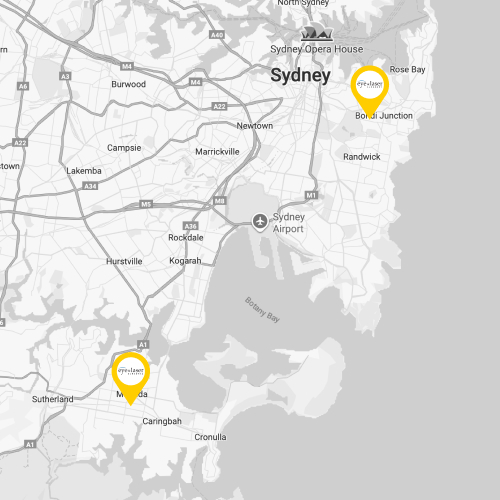
At Eye & Laser Surgeons in Bondi Junction, we assess the causes of double vision and determine whether treatment may be helpful.

Double vision may occur due to several conditions, including:

  • strabismus (eye misalignment)
  • nerve palsies affecting eye movement
  • thyroid eye disease
  • trauma
  • neurological conditions

A detailed assessment is important to determine the cause. You can learn more about the causes of double vision here.

reatment depends on the cause, severity, and symptoms.

However, the goal is always the same, to restore alignment, improve vision, and improve quality of life.

1. Glasses and prism

Prism can help reduce double vision in selected cases.

However:

  • it may not work for large or variable angles
  • some patients cannot tolerate prism

A targeted, minimally invasive treatment option

Botulinum toxin (commonly known as Botox) is a precise, muscle-based treatment used to improve eye alignment and reduce double vision in selected patients with adult strabismus.

Unlike surgery, it does not permanently alter the eye muscles. Instead, it temporarily weakens a specific muscle to allow the eyes to realign.

Is Botox a new or experimental treatment?

No — and this is a common misconception. Botulinum toxin has been used in the treatment of strabismus for over 40 years.

It was first introduced for strabismus in the 1970s, and importantly:

  • It has been used routinely at Moorfields Eye Hospital since 1982
  • It received FDA approval in 1989 for strabismus and related conditions
  • It has been used widely across the UK, United States and globally ever since.

In Australia, botulinum toxin has been TGA-approved since 1999, including for strabismus-related indications

Why Botox was developed for strabismus

Botulinum toxin was not originally designed as a cosmetic treatment.

It was developed specifically to address a key clinical problem:

how to temporarily weaken an eye muscle without surgery

This made it particularly useful in:

  • early or evolving strabismus
  • nerve palsies
  • patients with unstable measurements
  • situations where surgery needed to be delayed or avoided

As a result, it became an important tool in major centres such as Moorfields and has remained part of standard strabismus management worldwide. Dr Shanel Sharma learnt how to do Botox as a treatment for Strabismus when undertaking her fellowship at Moorfields and the Western Eye Hospitals in London in 2010-2011.

How Botox works in strabismus

Each eye moves because of a balance between opposing muscles.

In strabismus, that balance between the muscles is disrupted.

Botulinum toxin works by:

  • temporarily weakening an overacting muscle
  • allowing the opposing muscle to rebalance eye position
  • improving alignment and reducing double vision.

The injection is delivered directly into the eye muscle, usually with EMG guidance for precision. This is undertaken in the clinic and does not require Hospital admission.

What to expect after treatment

The timeline is important.

  • No immediate effect (first 24–48 hours)
  • Onset of action: 2–3 days
  • Peak effect: ~2 weeks
  • Duration: typically 3–4 months
  • With the first few injections – the dosing is being determined for your eyes- so early follow up appointments at 2 weeks and top up injections are sometimes required.

“In approximately 5% of patients, ocular alignment persists beyond the duration of Botox. This likely reflects the presence of functional binocular pathways, enabling the visual system to maintain alignment once the eyes are restored to a controllable position.”

This is more likely if:

  • binocular vision is still present
  • the deviation is relatively recent
  • the brain can re-establish fusion

Advantages of Botox

Botox has several practical advantages:

  • minimally invasive (no incisions)
  • rapid recovery
  • reversible
  • can be repeated
  • useful in evolving or uncertain cases

For some patients, it allows earlier return to work and normal function, especially when diplopia is disabling.

Limitations and risks

However, Botox is not risk-free.

Common temporary effects include:

  • droopy eyelid (ptosis) – approx 5%
  • temporary overcorrection
  • transient double vision in a different direction

These effects usually resolve as the toxin wears off.

Importantly: Most patients require repeat injections for ongoing control.

Precise, long-term correction for moderate to large deviations

Strabismus surgery is the most effective treatment for moderate to large-angle eye misalignment in adults, particularly when the deviation is stable and well defined.

Unlike Botox, which temporarily weakens a muscle, surgery repositions the eye muscles to restore alignment more precisely and more durably.

When surgery is the right option

Surgery is usually recommended when:

  • the angle of deviation is moderate to large
  • the strabismus is stable over time
  • prism or Botox is insufficient or not suitable
  • double vision is persistent and stable

In adults, this often includes:

  • long-standing or decompensated childhood strabismus
  • cranial nerve palsies after the recovery phase
  • thyroid eye disease (selected cases)
  • postoperative or consecutive deviations

In these situations, surgery provides the most predictable and sustained alignment.

How strabismus surgery works

Each eye has six muscles that control its position.

Strabismus surgery works by:

  • weakening overactive muscles (recession)
  • strengthening underactive muscles (resection or advancement)
  • or combining both, depending on the pattern

The goal is simple: to restore balance between the muscles so the eyes align naturally.

Importantly, the surgery is performed on the surface of the eye (not inside the eye).

Adjustable sutures — a key advantage in adults

One of the major advantages of adult strabismus surgery is the use of adjustable sutures.

This allows fine-tuning of eye position after surgery, once the patient is awake and able to provide feedback.

Why this matters:

  • improves accuracy of alignment
  • reduces the risk of under- or over-correction
  • allows adjustment based on real-world vision (not just measurements)

In adults, this is a critical advantage over fixed techniques.

What results to expect

Strabismus surgery aims to achieve:

  • improved eye alignment
  • reduction or elimination of double vision
  • improved binocular function (in some patients)
  • restoration of natural eye contact and facial symmetry

However, expectations need to be realistic:

  • perfect alignment is not always possible
  • some patients may still need prism or further treatment
  • a small number may require additional surgery over time

How long does strabismus surgery last?

The honest answer is it depends on the patient. but On average, results last around 10 years in adults

However, this varies significantly depending on:

  • the underlying cause
  • the presence of binocular vision
  • age-related changes
  • neurological or systemic conditions

Some patients maintain alignment for decades, or their whole life.

Others may experience gradual drift and need further treatment.

Recovery and downtime

Recovery is usually straightforward:

  • mild discomfort and redness for 1–2 weeks
  • return to normal activities within days
  • vision may fluctuate initially as the brain adapts

In cases of long-standing strabismus, the brain may need time to relearn alignment and fusion.

Risks and limitations

Strabismus surgery is generally safe, but like all surgery, it has limitations.

Potential issues include:

  • undercorrection or overcorrection
  • residual or new double vision
  • need for further surgery
  • rare complications such as infection or scarring

This is why careful assessment and planning are critical.

Adult strabismus is a misalignment of the eyes that often causes double vision, visual confusion, and reduced confidence in daily life.

However, some patient feel guilty that it is “cosmetic.” That is incorrect.

Adult strabismus is a medical condition that can affect how you see, function, and interact with others.

Dr Shanel Sharma specialises in the diagnosis and management of adult strabismus and double vision in Sydney, with a strong focus on both visual outcomes and quality of life.

Take the first step toward clearer, healthier vision

Book an appointment to learn more about your eyes and the treatment options that may suit you

Take the first step toward clearer, healthier vision

Book an appointment to learn more about your eyes and the treatment options that may suit you

Hi, I’m Dr Daya Sharma

I’m a cataract, corneal and refractive surgeon with subspecialty training from Moorfields Eye Hospital in London and Sydney Eye Hospital. I perform laser vision correction procedures, refractive lens surgery, and advanced cataract surgery using the latest diagnostic and surgical technology. My work is focused on helping people reduce their dependence on glasses and improve their quality of vision at all distances. I’m actively involved in research, publication and surgical education, and I take pride in offering honest, thorough guidance to every patient. My approach is personal, careful and always tailored to individual needs and lifestyles.

Hi, I’m Dr Shanel Sharma

I’m an ophthalmologist with subspecialty training in paediatric eye conditions, strabismus, medical retina and general ophthalmology from leading hospitals in Sydney and London, including Moorfields Eye Hospital. I hold a Fellowship with RANZCO and have published widely in peer-reviewed journals. My focus is providing careful, individualised care using evidence-based treatments. I’m accredited to treat a range of conditions and perform procedures including intravitreal injections, strabismus surgery and botulinum toxin treatments. I always aim to make the process clear, calm and supportive.