
Myopia in Adults: Why Vision Can Still Change
Myopia can continue to develop or progress in young adults, particularly in their 20s. Modern lifestyles involving prolonged screen use and reduced outdoor light exposure are key contributing factors. Assessing whether myopia is stable is essential before considering vision correction.
Introduction
Most people assume their vision stabilises after school.
In reality, we are seeing an increasing number of young adults whose myopia is starting or worsening in their 20s, particularly during university and early professional life.
Learn how myopia is first identified in children.
WHY MYOPIA CAN PROGRESS IN ADULTHOOD
Myopia progression is driven by axial elongation of the eye.
While this is well established in children, it can continue in young adults due to:
- prolonged near work
- reduced outdoor light exposure
EVIDENCE AND CLINICAL INSIGHT
Most high-quality evidence on myopia progression comes from childhood studies.
Research shows that increased outdoor light exposure is protective against myopia development and progression.
These findings are supported by large population studies and clinical research.
IMPORTANT CLINICAL POINT
In practice, we extrapolate these findings to adults
Because:
- the same biological mechanisms apply
- visual behaviour patterns persist
- environmental exposure remains similar
This explains why myopia can continue progressing into the 20s.
MODERN LIFESTYLE FACTORS
The most consistent pattern we see in young adults:
- high visual demand
- prolonged indoor work
- reduced exposure to high-lux outdoor light
These patterns are common in:
- healthcare professionals
- lawyers
- engineers
- students
WHY STABILITY MATTERS
Before considering any treatment: Is your myopia stable?
Signs it may still be progressing:
- prescription changing every 1–2 years
- worsening distance vision
- increased dependence on glasses
These patterns often begin earlier in life.
Learn how myopia is managed in children
If your myopia is stable, you may consider options to reduce dependence on glasses.
Read about myopia and vision correction
At Eye and Laser Surgeons:
- Dr Shanel Sharma focuses on assessing progression and stability
- Dr Daya Sharma advises on vision correction once stable
This ensures treatment decisions are made at the right time.
Concerned Your Vision Is Changing?
If your prescription continues to change, assessment is important.
Book an eye assessment at Eye and Laser Surgeons
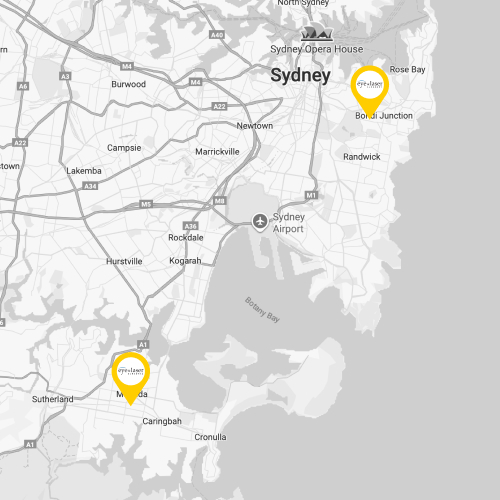
Clinics in Bondi Junction and Miranda
Frequently Asked Questions
Can myopia start in your 20s?
Yes. Myopia can start or continue to progress in your 20s. This is more common during university or early working years.
Why is my vision getting worse in my 20s?
Common reasons include long hours of near work, screen use and less time outdoors. These factors are linked to continued eye growth.
Does screen time cause myopia in adults?
Screen time does not directly cause myopia. However, long periods of near work, especially indoors, are associated with progression.
Can myopia still progress after childhood?
Yes. Although myopia often starts in childhood, it can continue to change in young adulthood.
This is likely due to ongoing axial elongation, which is the main driver of myopia.
How do I know if my myopia is stable?
Your myopia may be stable if your prescription has not changed for at least one to two years. A formal assessment is the best way to confirm this.
Why is stability important before treatment?
Stability is important before considering vision correction. If myopia is still changing, results from procedures like LASIK or SMILE may not be predictable.
Can I have laser eye surgery if my myopia is still changing?
No. Laser vision correction is usually only considered once myopia is stable.
Learn more about myopia and vision correction
What should I do if my vision is still changing?
If your prescription is changing, an eye assessment is recommended. This helps determine whether your myopia is stable or still progressing.