
New Myopia Treatments: What Has Changed?
New myopia treatments focus on slowing axial eye growth rather than simply correcting vision. Advances in atropine therapy and modern myopia control lenses allow more individualised approaches to managing progression.
Introduction
Myopia management has changed significantly over the past decade.
Traditionally, treatment focused on correcting blurred vision with glasses.
Now, the goal is different:
To slow the progression of myopia by reducing axial elongation of the eye
What These Treatments Do and Don’t Do
These treatments do not cure myopia
They aim to slow progression over time
Foundational Myopia Treatments Still Matter
Even with newer treatments: increased outdoor light exposure remains the most consistently supported intervention.
Evidence shows that increased outdoor light exposure is protective against myopia development and progression.
Key Mechanism
High-lux light exposure:
- regulates eye growth
- reduces axial elongation
- lowers long-term progression risk
Learn how this is applied in myopia management in children
ATROPINE: CURRENT APPROACH
Low-Dose Atropine Therapy
Atropine eye drops are widely used to slow myopia progression.
Commonly used concentrations include:
- 0.01%
- 0.025%
- 0.05%
Clinical Considerations
Different concentrations are selected based on:
- rate of progression
- age of the child
- tolerance
- risk of rebound
In general:
- higher concentrations may have greater effect on slowing progression
- lower concentrations may be better tolerated and less rebound
Treatment is individualised.
In 2026, 0.025% and 0.05% Atropine will NOT need to be compounded.
MYOPIA CONTROL GLASSES
Current Lens Platforms – with second generation technology.
Modern myopia control lenses are designed to influence eye growth rather than simply correct refractive error.
Examples include:
- Essilor Stellest (including newer Stellest 2.0 designs)
- HOYA MiYOSMART (including newer MiYOSMART iQ developments)
How They Work:
These lenses use optical designs such as:
- lenslet arrays
- peripheral defocus segments
to alter how light is focused on the retina.
The aim is to create a myopic defocus signal that helps reduce axial elongation.
Clinical Perspective
- These lenses are part of a rapidly evolving field
- Early and medium-term studies show reduced axial elongation compared with single vision lenses
- Long-term outcomes continue to be studied
No single lens is suitable for every child
Combination Approach
In many cases, management includes:
- behavioural strategies (light exposure)
- atropine therapy
- optical correction
Eye and Laser tailors treatment to the individual child
Limitations & Expectations
Even with newer treatments:
- progression may still occur
- response varies between individuals
- regular monitoring is essential
Rebound Risk
Stopping treatment too early may lead to: increased progression (rebound)
This is particularly relevant with atropine therapy.
Learn about myopia rebound
Role For Dr Shanel Sharma
Dr Shanel Sharma specialises in:
- assessing myopia progression risk
- monitoring axial length
- selecting appropriate treatment strategies
The goal is stabilising eye growth and reducing long-term risk
Link to Long-Term Pathway
Once myopia stabilises:
Treatment shifts from slowing progression to improving vision
Explore myopia and vision correction.
Role of Dr Daya Sharma
- assesses suitability for Laser Vision Correction
- determines optimal treatment
- focuses on long-term visual outcomes
Considering Myopia Treatment Options?
If your child’s myopia is progressing, updated treatment approaches may help reduce long-term risk.
👉 Book a consultation at Eye and Laser Surgeons
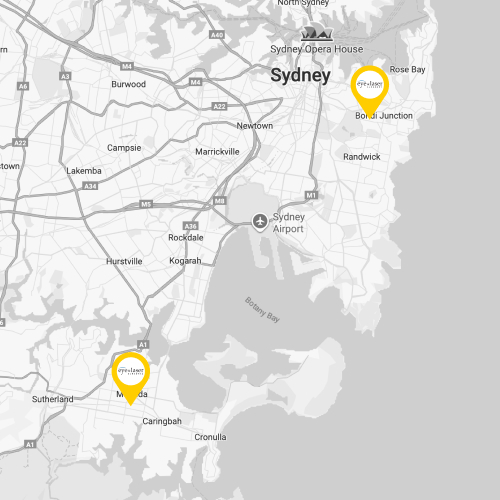
👉 Bondi Junction & Miranda
Frequently Asked Questions
What are the newest treatments for myopia?
Recent options include updated atropine eye drops (0.01%, 0.025% and 0.05%) and newer myopia control lenses such as Stellest and MiYOSMART. These treatments aim to slow eye growth rather than simply correct vision.
Are newer myopia treatments better?
Newer treatments use advanced technology to improve control of eye growth. Results still vary between individuals, and long-term outcomes continue to be evaluated.
How do myopia control lenses work?
These lenses change how light focuses on the retina. They create a “peripheral defocus” effect, which helps reduce the signal for eye growth and slows myopia progression.
What is the difference between atropine strengths?
Higher concentrations slow myopia progression more effectively but increase side effects such as light sensitivity and blurred near vision. Lower concentrations cause fewer side effects and are easier for children to tolerate.
Can treatments be combined?
Yes. Many children use a combination of strategies, including more time outdoors, atropine eye drops, and specialised myopia control lenses.
Do these treatments stop myopia completely?
No. These treatments aim to slow progression, not stop or reverse myopia completely.