
Top 5 Signs Your Child May Have Myopia
Myopia, also called short-sightedness, is becoming increasingly common in children around the world. In Australia, many parents first notice the problem when a child struggles to see distant objects at school or during sport.
Early detection is important. When myopia is diagnosed early, treatments may help slow the progression of eye growth and reduce the risk of high myopia later in life.
However, children often assume their vision is normal. Consequently, parents and teachers are usually the first to notice the warning signs.
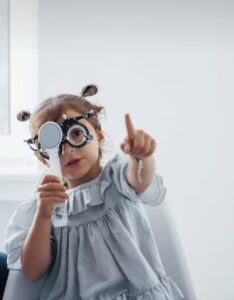
A vision test can help detect myopia (short-sightedness) in children early, allowing treatment to begin sooner.
Top 5 Signs Your Child May Have Myopia
Parents often search for the signs of myopia in children before they realise their child may need an eye examination.
Common signs include the following.
1. Squinting to See Distant Objects
Children with myopia frequently squint when looking at distant objects such as classroom boards, television screens or sports scoreboards. Squinting temporarily sharpens focus and can make blurred vision appear clearer.
2. Sitting Very Close to Screens
Some children sit unusually close to televisions, tablets or computers. In many cases, this behaviour helps them compensate for blurred distance vision.
3. Difficulty Seeing the Classroom Board
Teachers sometimes notice that a child struggles to read the classroom board or frequently asks to move closer to the front of the room.
4. Holding Books Very Close
Children with myopia may hold books, tablets or phones unusually close to their face while reading. Because near vision remains clear, this behaviour may seem normal at first.
5. Frequent Headaches or Eye Strain
Blurred vision can lead to headaches, eye fatigue and difficulty concentrating during schoolwork.
If these signs appear, an eye examination can determine whether myopia or another vision problem is present. Importantly, early detection allows treatment to begin sooner.
Why Myopia in Children Is Increasing
Researchers believe several factors contribute to the growing number of children developing myopia.
First, children now spend more time performing near visual tasks, including reading, studying and using digital devices.
Second, children often spend less time outdoors than previous generations. As a result, their eyes receive less exposure to bright natural light.
Because of these lifestyle changes, myopia is now considered a significant global public health issue.
How Natural Light Helps Protect the Eyes
Research suggests that bright outdoor light helps reduce the risk of developing myopia.
Importantly, scientific studies show that the protective effect appears to come from visible light rather than ultraviolet (UV) light.
Experimental research by Ashby and colleagues demonstrated that bright light exposure slowed the development of myopia even when UV wavelengths were removed.
Similarly, studies in shrews also showed that UV-free visible light reduced myopia progression.
These findings suggest that the intensity of light outdoors, rather than UV exposure itself, may influence eye growth.
Therefore, encouraging children to spend time outside each day may help support healthy visual development.
Modern Treatments to Slow Myopia Progression
If myopia develops, several treatments may help slow its progression during childhood.
Low-Dose Atropine Eye Drops
Low-dose atropine eye drops can reduce the rate of myopia progression in many children. Typically, the drops are used once daily.
Myopia-Control Spectacles
Special spectacle lenses are designed to alter the way light focuses on the retina. Consequently, these lenses may help slow excessive eye growth.
Myopia-Control Contact Lenses
Certain soft contact lenses have been developed specifically to reduce the progression of myopia.
Lifestyle Measures
Increasing time spent outdoors and reducing prolonged near work may also help support healthy visual development.
An ophthalmologist can recommend the most appropriate treatment based on the child’s age, level of myopia and lifestyle.
Can Myopia Be Treated Permanently?
During childhood, treatments focus on slowing the progression of myopia rather than reversing it.
However, once eye growth stabilises in adulthood, laser vision correction may be considered in suitable patients to reduce dependence on glasses or contact lenses.
When Should Your Child Have an Eye Examination?
Parents should consider an eye examination if their child shows signs of blurred vision or difficulty seeing distant objects.
Assessment is particularly important if:
- a child squints to see distant objects
- teachers report difficulty seeing the classroom board
- headaches occur during reading or schoolwork
- there is a family history of myopia
Regular eye examinations help detect vision problems early and allow treatment to begin when it can be most effective.
Children’s Myopia Assessment in Sydney
Children with possible myopia can benefit from a comprehensive eye examination.
At Eye & Laser Surgeons in Sydney, detailed assessments help determine whether myopia or another vision condition is present.
Dr Shanel Sharma is a specialist ophthalmologists who assess and manage children with myopia and other eye conditions.
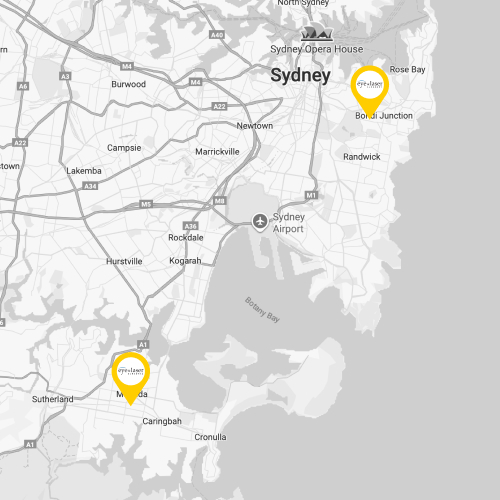
Clinics are located in:
• Bondi Junction
• Miranda
These locations provide convenient access for families across Sydney and the Sutherland Shire.
Early assessment allows discussion of modern myopia treatments designed to help slow progression during childhood.
Frequently Asked Questions About Myopia in Children
What is myopia?
Myopia, also called short-sightedness, is a common vision condition where distant objects appear blurred while near objects remain clear.
This occurs when the eye grows slightly longer than normal, causing light to focus in front of the retina rather than directly on it. Myopia often begins during childhood and may gradually progress as the eyes continue to grow.
At what age does myopia usually develop?
Myopia most commonly develops between 6 and 12 years of age.
Once it begins, it may gradually worsen throughout the teenage years while the eyes are still growing. Because of this, early detection and monitoring are important.
Can myopia get worse as children grow?
Yes. Myopia often increases as the eye grows during childhood and adolescence.
However, modern myopia control treatments may help slow the progression of myopia. These treatments aim to reduce the risk of developing high myopia later in life.
Does spending time outdoors help prevent myopia?
Research suggests that spending time outdoors may reduce the risk of developing myopia.
Importantly, studies indicate that the protective effect appears to come from bright visible light rather than ultraviolet (UV) light. As a result, encouraging children to spend time outside each day may support healthy eye development.
Can myopia be permanently corrected?
During childhood, treatments focus on slowing the progression of myopia rather than permanently correcting it.
However, once eye growth stabilises in adulthood, laser vision correction may be an option for suitable patients to reduce dependence on glasses or contact lenses.
You can learn more about these options on our laser vision correction page.
When should my child have an eye examination?
Children should have an eye examination if they show signs such as:
- squinting to see distant objects
- difficulty seeing the classroom board
- sitting very close to screens
- frequent headaches during reading or schoolwork
Early assessment helps detect myopia and allows treatment to begin when it can be most effective.
Find out if you are suitable for vision correction
Not everyone is eligible for vision correction surgery.
Find out if you could benefit from this life changing surgery by taking the quick self-suitability quiz below: