
Selective Laser Trabeculoplasty (SLT) in Sydney
Selective Laser Trabeculoplasty (SLT) is a 5-minute, in-clinic glaucoma laser treatment that lowers eye pressure by improving drainage through the trabecular meshwork. It is commonly used as an alternative or complement to glaucoma eye drops.
Glaucoma Laser Surgery at Eye & Laser Surgeons
Selective Laser Trabeculoplasty (SLT) is one of the most widely used and well-studied forms of glaucoma laser surgery. It is a quick, in-clinic treatment designed to lower eye pressure in patients with open-angle glaucoma and ocular hypertension.
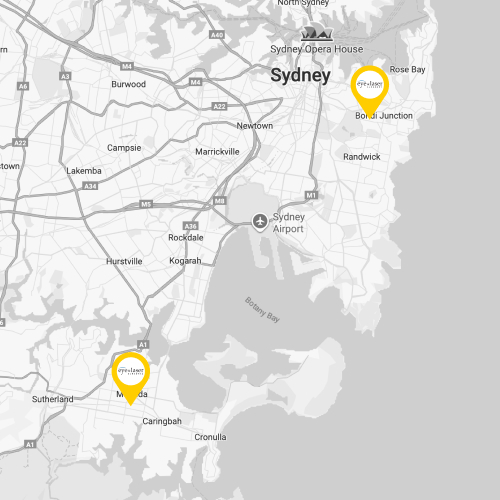
At Eye & Laser Surgeons, Dr Daya Sharma and Dr Shanel Sharma offer SLT as part of a comprehensive, evidence-based approach to glaucoma care in Sydney, with clinics in Bondi Junction and Miranda.
The procedure itself usually takes less than 5 minutes, and the full appointment can take as little as 30 minutes, when booked early in the day. Most patients are able to return to normal daily activities shortly afterwards.
What is SLT?
SLT (Selective Laser Trabeculoplasty) is a laser treatment that improves the drainage of fluid from the eye.
It works by applying low-energy laser pulses to the trabecular meshwork, the eye’s natural drainage system. This stimulates a biological response that improves fluid outflow and lowers intraocular pressure (IOP). Learn more about glaucoma and how it affects eye pressure.
Unlike traditional glaucoma surgery, SLT does not require incisions or tissue removal, and Dr Sharma will perform the treatment in the clinic.
Lowering intraocular pressure remains the only proven way to slow glaucoma progression, even in normal tension glaucoma.
Why glaucoma laser surgery matters
Glaucoma is a chronic condition that can lead to progressive vision loss if untreated.
In many patients, the underlying issue is reduced efficiency of the eye’s drainage system. This leads to increased eye pressure, which gradually damages the optic nerve.
Glaucoma laser surgery, such as SLT, targets this drainage system directly.
What happens during SLT?
Most patients tolerate SLT well, and the procedure usually takes only a few minutes.
During the appointment:
- Your doctor places anaesthetic drops in the eye
- You sit at a slit-lamp microscope, similar to a routine eye examination
- Your doctor gently places a small lens on the eye
- The laser targets the drainage angle to improve fluid outflow
You may notice flashes of light during the procedure. Most patients describe the treatment as comfortable or only mildly noticeable.
Afterwards, vision may feel slightly dim or blurred for a short period. Most patients can return to normal activities once vision has settled.
Learn more about glaucoma testing and assessment.
SLT vs glaucoma eye drops
Glaucoma is often treated with daily eye drops. While effective, drops can be associated with:
- Ocular surface irritation or dryness
- Difficulty with long-term adherence
- Local side effects such as redness or allergy
SLT provides an alternative approach by treating the drainage system directly. See full comparison: SLT vs glaucoma eye drops.
What does the evidence show?
The LiGHT Trial, a large randomised controlled study published in The Lancet, compared SLT with glaucoma drops as first-line treatment.
- Around 74% of patients treated with SLT remained drop-free at 3 years
- SLT provided comparable or better pressure control than drops
- Patients treated with SLT were less likely to require glaucoma surgery
At 6 years, the six-year results of the LiGHT Trial was published in the American Journal of Ophthalmology and found:
- Around 70% of eyes remained controlled without drops or surgery
- There was less disease progression compared with initial drop treatment
These findings have influenced international guidelines, which now include SLT as a first-line treatment option in appropriate patients.
Key benefits of SLT
- Quick procedure – typically under 5 minutes
- In-clinic treatment – no hospital admission required
- Minimal downtime – most patients resume normal activities the same day
- Reduces reliance on drops for many patients
- Repeatable treatment if required
- Evidence-based with strong long-term data
Who is suitable for SLT?
SLT may be appropriate for patients with:
- Primary open-angle glaucoma
- Ocular hypertension
- Difficulty tolerating glaucoma drops
- Preference to reduce long-term medication use
It is also sometimes used in specific secondary glaucomas, such as pigmentary or pseudoexfoliative glaucoma.
Suitability often depends on underlying glaucoma risk factors and eye structure.
Who may not be suitable?
SLT may not be appropriate if:
- The drainage angle cannot be clearly visualised
- There is active eye inflammation
- The glaucoma type requires a different approach (e.g. angle-closure glaucoma)
- Very low target pressures are required
In these situations, other treatments such as glaucoma surgery may be considered.
How long does SLT last?
The effect of SLT varies between individuals.
- Many patients experience pressure reduction lasting 1 to 5 years
- The procedure can often be repeated if needed
- Additional treatments (drops or surgery) remain available if required.
Learn more about recovery and follow-up: what happens after SLT.
Risks and side effects
SLT has a strong safety profile.
Potential effects include:
- Mild redness or irritation
- Temporary blurred vision
- Short-term increase in eye pressure
- Mild inflammation
In large clinical studies, serious complications from SLT have been uncommon.
Is SLT painful?
Most patients tolerate SLT well.
Doctors place anaesthetic drops in the eye before treatment, and most patients describe the procedure as painless or only mildly uncomfortable.
Can I drive after SLT?
Many patients are able to drive after SLT once their vision has settled.
However, this varies between individuals. You should only drive when your vision feels clear and your ophthalmologist confirms it is safe.
Why choose Eye & Laser Surgeons?
Eye & Laser Surgeons Sydney, provides specialist ophthalmic care in Sydney, combining modern technology with a careful, individualised approach.
Dr Shanel Sharma
Experienced ophthalmologist with expertise in glaucoma, cataract, and medical ophthalmology.
Dr Daya Sharma
Corneal, cataract and refractive surgeon with experience managing complex anterior segment and surgical cases.
Patients are assessed comprehensively, with attention to long-term outcomes—not just short-term pressure reduction.
Book a glaucoma laser consultation in Sydney
If you have glaucoma, elevated eye pressure, or want an alternative to eye drops, a glaucoma assessment can help you decide whether SLT suits your eyes and treatment goals.
Book a Glaucoma consultation
Eye and Laser Surgeons — Bondi Junction & Miranda
Bondi Junction: (02) 9387 5300
Miranda: (02) 9531 5300
Email: reception@eyeandlaser.com.au
Frequently asked questions
Is SLT the same as glaucoma surgery?
No. SLT is a laser treatment performed in the clinic. It does not involve incisions or stitches.
Does SLT replace glaucoma surgery?
In many patients, SLT can delay or reduce the need for more invasive surgery, but it does not replace all surgical options.
Will I still need eye drops?
Some patients remain drop-free for years after SLT. Others may still require drops, but often at a reduced level.
Can Doctors repeat SLT?
Yes. Doctors can repeat SLT if eye pressure rises again over time, because the treatment preserves the drainage tissue.