
LASIK for Emergency Workers: Vision When There Is No Margin for Error
Emergency workers don’t get second chances.
Whether it’s a police officer chasing a suspect, a firefighter entering a smoke-filled building, or a paramedic inserting a cannula in a moving ambulance—vision needs to be immediate, stable, and precise.
Glasses can fog. They can slip. They can fall off.
Contact lenses can dry out, shift, or become uncomfortable during long shifts.
In high-pressure environments, even a momentary disruption to vision is not just inconvenient—it can be dangerous.
The reality of vision in emergency work
Emergency environments are unpredictable.
- Rapid movement and physical exertion
- Low-light or smoke-filled conditions
- Heat, wind, dust, and debris
- Long shifts with fatigue and reduced blink rate
This is not clinic-based vision testing.
This is real-world performance under pressure.
Where glasses can fail at the wrong moment
For many emergency workers, glasses work—until they don’t.
Police officers:
- Fogging during pursuit
- Glasses slipping while running or climbing
- Loss of peripheral awareness
Firefighters:
- Fogging inside masks or breathing apparatus
- Heat and moisture affecting clarity
- Reduced precision in already low-visibility environments
Paramedics:
- Subtle visual tasks like cannulation require accuracy
- Movement, stress, and time pressure amplify small visual limitations
These are not theoretical problems.
They happen at exactly the wrong time.
Contact lenses are not always the solution
Contact lenses can help—but introduce different issues:
- Dryness during long shifts
- Reduced comfort in air-conditioned or high-stress environments
- Risk of irritation or contamination
For some, they work well.
For others, they become another variable in an already unpredictable environment.
How LASIK may change this
LASIK reshapes the cornea to improve how light focuses on the retina.
For some emergency workers, this may:
- Reduce dependence on glasses or contact lenses
- Remove one variable during high-pressure situations
- Provide more consistent vision throughout a shift
However, this is not about convenience alone.
It’s about reliability of vision when it matters most.
Precision matters more than “6/6 vision”
This is where most LASIK discussions fall short.
Emergency workers don’t just need to see clearly on a chart.
They need:
- Performance in low contrast environments
- Stability under glare and stress
- Reliable vision when fatigued
This depends on:
- Corneal shape and optics
- Higher-order aberrations
- Pupil size (especially in low light)
- Tear film stability
Why assessment is critical
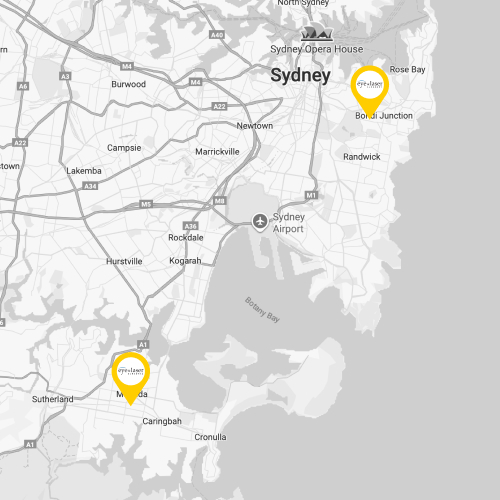
At our Sydney clinics, Dr Daya Sharma focuses on quality of vision, not just whether LASIK is technically possible.
Assessment may include:
- Detailed corneal imaging
- Wavefront analysis
- Tear film and dry eye evaluation
- Night vision considerations
This allows treatment to be tailored to the demands of the individual—not standardised.
Not everyone is suitable—and that matters
You may be suitable if:
- Your prescription is stable
- Your cornea is healthy
- Your ocular surface is well managed
However:
- Some emergency workers are better suited to PRK or SMILE
- Some may not be suitable for laser vision correction at all. Refractive surgery screening is important next step. This can be done through an initial online screening test or a Free Suitability assessment at Eye & Laser Surgeons.
A careful assessment is essential.
Recovery and return to duty
Most people experience:
- Functional vision within 24–48 hours
- Gradual stabilisation over several weeks
However, emergency workers need to consider:
- Timing of return to high-risk environments
- Exposure to smoke, dust, and contaminants
- Physical demands of the role
Return to work should be planned, not rushed.
LASIK for high-performance professions
Emergency workers share visual demands with other high-performance professions:
- Surgeons → precision and endurance
- Pilots → stability in variable environments
- Elite athletes → reaction time and dynamic tracking
Explore:
- LASIK for Surgeons
- LASIK for Pilots
- LASIK for Tradespeople
- LASIK for Elite Athletes
Explore the 6 Professions most likely to benefit from LASIK
What LASIK does—and does not do
LASIK may reduce dependence on glasses or contact lenses.
It does not:
- Guarantee perfect vision in all conditions
- Prevent future age-related changes
- Eliminate all visual symptoms
Clear expectations are important.
Considering LASIK as an emergency worker?
If your work depends on reliable, high-quality vision, it’s worth understanding your options properly.
Book a free suitability consultation allows us to assess:
- Whether LASIK is appropriate
- Whether another procedure may be better
- What outcomes you can realistically expect
or Undertake our free online suitability assessment.
Frequently Asked Questions About LASIK for Emergency Workers
Is LASIK safe for emergency workers?
LASIK is a well-established procedure, but suitability depends on individual factors such as corneal health, prescription stability, and occupational demands. A personalised assessment is essential.
Can LASIK improve performance in high-pressure situations?
LASIK may reduce dependence on glasses or contact lenses, which can be beneficial in dynamic or unpredictable environments. However, outcomes vary and should be discussed in detail during consultation.
Will LASIK eliminate all vision problems?
No. LASIK aims to improve focus and reduce reliance on corrective lenses, but it does not prevent age-related changes or guarantee perfect vision in all conditions.
How soon can emergency workers return to work after LASIK?
Many people return to normal activities within a few days. However, for emergency workers, timing should be individualised depending on exposure risks and job demands.
Is LASIK better than contact lenses for emergency workers?
Contact lenses can work well, but may cause dryness or discomfort during long shifts. LASIK removes reliance on external correction, but suitability must be carefully assessed.
Are there alternatives to LASIK?
Yes. Procedures such as PRK or SMILE may be more appropriate depending on corneal structure, lifestyle, and occupational needs.
Find out if you are suitable for vision correction
Not everyone is eligible for vision correction surgery.
Find out if you could benefit from this life changing surgery by taking the quick self-suitability quiz below: