
Six Professions That Benefit Most from LASIK in Sydney
LASIK to correct vision is often considered for convenience. However, in many professions, laser eye surgery can also improve performance, safety, and day-to-day reliability.
Why Some Professions Benefit More Than Others
Laser vision correction is not just about removing glasses or contact lenses. In many professions, vision directly affects performance and safety.
In particular, vision can influence:
- Safety
- Performance
- Reaction time
- Visual clarity under pressure
Therefore, the real benefit of LASIK is often seen in high-demand environments.
Challenges with Glasses in Active Work
Glasses can work well in controlled environments. However, in active or physically demanding settings, they can become a limitation.
Common challenges include:
- Fogging in changing environments
For example, moving between air-conditioned spaces and outdoor conditions can cause lenses to fog. - Slipping during movement
Glasses can slide down the face during physical activity, especially with sweat from exertion, which interrupts focus. - Interference with protective equipment
Safety glasses and helmets may not fit comfortably over prescription frames. Specific prescription eyewear can be expensive and impractical. - Reduced clarity in demanding conditions
Water, sweat, and dust can accumulate on lenses and reduce visibility. - Dependence on external correction
In fast-paced environments, glasses can become a limitation if damaged or unavailable.
Glasses slipping or moving during work and physical activity can be distracting and inconvenient, particularly in demanding environments.
Why This Matters
Even small interruptions to vision can affect:
- Efficiency
- Comfort
- Situational awareness
As a result, reducing reliance on glasses may improve consistency of vision in real-world environments.
If these challenges sound familiar, you can start with a simple step:
Vision Correction Self Test
1. Pilots and Aviation Professionals
Pilots require clear, stable vision across multiple distances. They must read instrument panels, monitor flight data, and maintain awareness of the external environment at the same time.
Glasses and contact lenses can introduce limitations. For example, glasses can introduce distortions in peripheral vision, and contact lenses can become dry during long flights, especially with dry cabin air. As a result, visual clarity may fluctuate when consistency is most important.
In aviation, even small interruptions to vision can affect performance and safety. Therefore, many pilots seek reliable vision without glasses or contact lenses that remains stable in changing conditions.

LASIK allows pilots to enjoy precise vision across multiple distances, from cockpit instruments to runway alignment in changing light conditions.
LASIK for Pilots
2. Surgeons and Healthcare Professionals
Surgical work demands precision, depth perception, and sustained focus. These requirements must be maintained throughout procedures that may last several hours.
However, glasses can fog or shift when worn with masks. Contact lenses, while commonly used, may dry out over time. As a result, vision can become less consistent during prolonged cases.
In this setting, clear and stable vision supports accuracy, efficiency, and workflow in the operating environment.
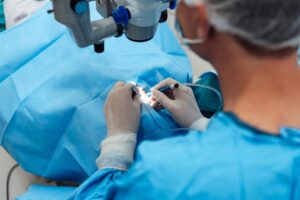
Surgical environments demand precision, sustained focus, and reliable vision during prolonged procedures.
LASIK for Surgeons
3. Vision for Professional Cricketers & Athletes
Athletes require clear, stable vision to perform at their best. In fast-paced sports, even small changes in visual clarity can affect reaction time and decision-making.
Contact lenses are commonly used. However, they can introduce problems. For example, dry eye may cause fluctuations in vision, particularly during long periods of play or in windy conditions. As a result, vision can become inconsistent at critical moments.
Glasses present a different set of challenges. Vision may be different depending on head posture or looking through the edge of the lens. Glasses may fog with changes in temperature or humidity, and they can shift, slip or break during movement. In addition, movement of the frame can be distracting. It may also interrupt focus or obscure parts of the visual field, making it more difficult to track a fast-moving object.
For a batter facing a ball travelling at 130 km/h or more, there is little margin for error. Clear, uninterrupted vision is essential to track the ball accurately and respond rapidly.
As a result, many athletes look for solutions that provide more consistent visual performance without reliance on external correction.
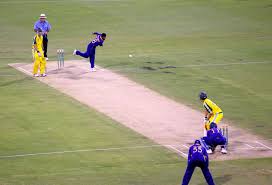
Athletes rely on rapid visual processing, depth perception, and accurate tracking of fast-moving objects.
Experience in Elite Sports Vision
Dr Daya Sharma is a consultant for Cricket New South Wales and Cricket Australia, and has experience managing eye disorders in elite cricketers, including performing laser vision correction.
This includes assessing vision in high-speed environments where reaction time and visual precision are critical. As a result, this experience informs a more performance-focused approach to refractive surgery.
This is not limited to professional athletes. Many people participate in sport for fitness and recreation, where clear vision is equally important. However, glasses can fog, shift, or fall off during activity, which may affect balance, coordination, and awareness. As a result, this can increase the risk of falls, collisions, or injury.
For example, this may occur when skiing with fogging of goggles, water skiing or surfing where glasses may be lost, or playing sports such as tennis or pickleball where rapid head movement can cause glasses to shift. In these situations, consistent and reliable vision supports both performance and safety. Many active water sports make either glasses or contact lenses impractical, and laser vision correction can be an excellent option.
LASIK for Elite Athletes
4. Emergency Services (Police, Firefighters, Paramedics) and Military Personnel

Emergency services personnel operate in unpredictable conditions where reliable vision is critical for safety.
Emergency services personnel operate in unpredictable and high-pressure environments. These may include smoke, heat, water, and rapidly changing conditions.
Glasses can fog in some environments or when used with protective masks. In addition, they may shift or become dislodged during physical activity. Contact lenses can also be affected by dryness or environmental exposure. Exposure of contact lenses to water (especially contaminated water) is a significant risk factor for corneal infection.
Military personnel may be deployed to dangerous environments without clean water and sanitation, meaning that use of contact lenses can be unsafe in terms of infection risk. In addition, loss of a contact lens can lead to immediate reduction of visual function and imbalance, creating a dangerous situation. Broken, scratched/damaged or lost glasses can also lead to an immediate and significant loss of function in a hazardous environment.
As a result, maintaining consistent vision can be challenging. In situations where rapid decision-making is required, reliable vision supports both safety and performance.
Depending on the specific work roles, some forms of vision correction may be preferred over others, to maximise safety in various environments.
LASIK of Emergency Workers
5. Corporate Professionals and High-Performance Executives
Many professionals spend long hours working on screens, presenting, and moving between different environments. As a result, visual comfort and consistency become increasingly important throughout the day.
Glasses can introduce practical challenges in these settings. For example, they may shift or slip during presentations, which can be distracting and interrupt focus. In addition, glasses can be misplaced or damaged, particularly during busy or travel-heavy schedules. Some professional in communications roles prefer not to wear spectacles in various situations.
Contact lenses are often used as an alternative. However, they may contribute to dryness, especially with prolonged screen use or in air-conditioned environments.
Beyond the workplace, many professionals lead active lifestyles. Glasses may move, fog, or fall off during sport, which can affect coordination, confidence, and overall enjoyment.
As a result, some individuals look for solutions that provide more consistent vision across both professional and recreational activities.
6. Tradespeople (Plumbers, Electricians, Builders)
Tradespeople work in physically demanding environments where vision must remain reliable. Tasks often involve movement, confined spaces, and exposure to dust, water, and debris.
Glasses can slip during physical work or interfere with protective eyewear. They may also become dirty or obstructed, reducing clarity. Contact lenses can be affected by environmental conditions and may require frequent adjustment.
As a result, these challenges are not just inconvenient—they can affect efficiency and safety. Consistent, uninterrupted vision is particularly valuable in these settings.
LASIK for Tradies
A Specialist Approach to Refractive Surgery
Vision correction surgery is not a single procedure.
It includes laser vision correction options:
It also includes lens based correction options
Choosing the right option requires detailed assessment of:
- Corneal shape and thickness
- Tear film stability
- Visual demands specific to the patient’s profession
At Eye & Laser Surgeons, Dr Daya Sharma focuses on working with you to use the best treatment to address your visual needs.
Is LASIK Right for Everyone?
LASIK is not a one-size-fits-all procedure. Suitability depends on factors such as corneal structure, prescription stability, ocular surface health, and your visual demands. Some patients are suited for other procedures.
As a result, a detailed assessment is required to determine the most appropriate treatment.
Choosing the Right Surgeon Matters
Choosing the right surgeon is an important part of the laser vision correction process. LASIK, SMILE, PRK, TransPRK, ICL and refractive lens exchange are not interchangeable procedures. Therefore, good outcomes depend on careful assessment, appropriate procedure selection and a detailed understanding of visual quality.
Dr Daya Sharma is a Sydney refractive surgeon with subspecialty expertise in corneal, cataract and laser vision correction surgery. In addition, his work with professional cricketers through Cricket NSW and Cricket Australia gives him a deep appreciation of high-performance vision, where clarity, contrast, focus, glare control and confidence in vision can matter in demanding real-world conditions.
Because of this, Dr Sharma takes a detailed approach to refractive surgery assessment. He considers corneal structure, prescription stability, tear film quality, pupil size, higher-order aberrations, eye health and each patient’s specific visual demands before recommending treatment. As a result, the goal is not simply to reduce dependence on glasses or contact lenses, but to choose the most appropriate vision correction option for the patient’s eyes, lifestyle and visual priorities.
For patients considering laser eye surgery in Sydney, this type of detailed assessment is especially important. A surgeon who regularly thinks about visual performance, optical quality and long-term eye health is better placed to guide patients through the choice between LASIK, PRK, TransPRK, SMILE, SmartSight, ICL or refractive lens exchange.
Final Thoughts
Ultimately, the benefit of refractive surgery is not just convenience. It is the reliability of vision in environments where it matters most.
Book a Consultation
If you are considering LASIK, PRK, SMILE, or other refractive procedures:
Undertake the Vision Correction Self Test now
Frequently Asked Questions
Who is the best candidate for LASIK?
Is LASIK safe for professionals in high-risk jobs?
LASIK is widely used, but suitability depends on individual assessment and occupational requirements. Sometimes surface laser (PRK), SMILE or ICL may be better options.
Does LASIK improve performance?
LASIK improves vision without glasses or contact lenses. Whether this translates to performance depends on the individual.
What are alternatives to LASIK?
Alternatives include PRK, SMILE (lenticule extraction), and implantable collamer lenses.
Find out if you are suitable for vision correction
Not everyone is eligible for vision correction surgery.
Find out if you could benefit from this life changing surgery by taking the quick self-suitability quiz below:
Our most popular procedures
Take the first step toward clearer, healthier vision
Book an appointment to learn more about your eyes and the treatment options that may suit you
Take the first step toward clearer, healthier vision
Book an appointment to learn more about your eyes and the treatment options that may suit you