





Renew your vision with intraocular lenses in Sydney

Discover how advanced lens implants can help restore clarity and reduce dependence on glasses after cataract or lens replacement surgery

Renew your vision with intraocular lenses in Sydney

Discover how advanced lens implants can help restore clarity and reduce dependence on glasses after cataract or lens replacement surgery

With premium intraocular lenses, you can enjoy clearer, sharper vision

Explore how the latest lens options can restore focus at different distances and may support your lifestyle goals –

  • Intraocular lenses, or IOLs, are clear, artificial lenses used to replace the eye’s natural lens during cataract surgery or lens replacement surgery.
  • They are designed to restore focus and improve clarity by correcting refractive errors such as short-sightedness, long-sightedness, or astigmatism. Modern IOLs come in a variety of designs to suit different visual needs.
  • Once implanted, they become a permanent part of the eye.
  • The choice of lens depends on your lifestyle, vision goals, and overall eye health, and your surgeon will help you select the best option for long-term visual quality.
  • In addition, premium intraocular lenses can do more than simply replace the cataract.
  • Depending on the health of the eye, premium lens options may also help reduce dependence on glasses for distance, intermediate or near tasks. For example, toric intraocular lenses can correct astigmatism, while extended depth of focus lenses may provide a broader range of useful vision.
  • However, no intraocular lens is perfect. Some patients may still need glasses for reading fine print, prolonged computer work or night driving.

Each type of intraocular lens works in a unique way to restore clear vision.

  • Monofocal lenses focus light at one distance, usually far, for clear driving and distance vision.
  • Multifocal lenses split light into several focal points so you can see near, intermediate, and far without changing glasses.
  • Extended Depth of focus lenses are designed to create a broader range of clear vision than standard monofocal lenses, usually improving distance and intermediate vision while aiming to minimise the halos and glare associated with multifocal lenses.
  • All IOLs focus light onto the retina for clearer, lasting vision.

There are several types of intraocular lenses available:

  • Monofocal lenses provide clear vision at a single distance, usually for driving or watching TV.
  • Multifocal lenses offer vision across near, intermediate, and far distances, supporting everyday tasks without glasses.
  • Extended depth of focus lenses that provides a smoother range of vision than a standard monofocal lens, while generally causing fewer halos than many multifocal lens designs.
  • The goal is to help each patient choose an intraocular lens that supports clear, comfortable and functional vision. In many cases, this means balancing spectacle independence with visual quality, contrast sensitivity and the risk of glare or halos.
  • A toric lens, also called a toric intraocular lens or toric lens implant, helps reduce astigmatism during cataract surgery.
  • Astigmatism occurs when the cornea focuses light unevenly. As a result, vision may look blurred, shadowed or distorted, even after the cataract has been removed.
  • Importantly many lens designs are available as either toric or non-toric versions. For example, depending on the eye and visual goals, cataract surgery may involve a monofocal toric lens, multifocal toric lens or extended depth of focus toric lens.
  • At Eye & Laser Surgeons in Sydney, Dr Daya Sharma and Dr Shanel Sharma use detailed measurements before cataract surgery to assess astigmatism and plan the most suitable lens.
  • In addition, corneal topography maps the shape of the cornea and helps estimate how much astigmatism may remain after surgery. Therefore, toric lens planning depends on more than a glasses prescription. It also requires accurate lens calculations, ocular surface assessment and careful surgical planning.
  • Because toric intraocular lenses come in set powers, they do not offer the same small gradations as glasses or contact lenses. For this reason, the aim is to reduce as much visually significant astigmatism as realistically possible. However, small amounts of residual astigmatism may still remain.
  • If residual astigmatism affects vision after cataract surgery, further options may include glasses, contact lenses, laser vision correction or surgical refinement.
  • For patients considering premium cataract surgery in Sydney, toric lenses may improve unaided distance vision, reduce dependence on glasses and enhance visual quality. Nevertheless, the best option depends on eye health, accurate measurements and each patient’s lifestyle goals.
  • For this reason, lens selection should be highly individualised.
  • Therefore, the aim is not simply to choose the most advanced lens, but to choose the most appropriate lens for the patient’s eyes, lifestyle and tolerance for visual side effects.
  • Like all surgical procedures, intraocular lens implantation carries some risks.
  • These may include temporary inflammation, infection, or swelling in the eye.
  • Rarely, issues such as lens displacement, residual refractive error, or glare and halos can occur.
  • Most side effects are mild and manageable with prompt care.
  • Your surgeon will take detailed measurements and use advanced imaging to reduce risk and improve precision.
  • Regular follow-up visits after surgery are important to ensure healing and optimal vision outcomes.
  • In most cases, intraocular lens implantation is a safe and effective solution for restoring sight.
  • After cataract surgery, many patients notice clearer, brighter and more stable vision. Colours may appear more vivid, particularly in the blue hues, contrast may improve, and everyday tasks often become easier. However, the exact result depends on the type of intraocular lens used, the health of the eye and whether there are other conditions such as dry eye, macular degeneration, glaucoma, corneal irregularity or astigmatism.
  • With a standard monofocal intraocular lens, the usual aim is clear vision at one main distance, most commonly distance vision. As a result, glasses may still be needed for reading or intermediate tasks. With toric intraocular lenses, astigmatism can also be reduced, which may improve sharpness and reduce dependence on distance glasses.
  • By comparison, premium intraocular lenses such as extended depth of focus lenses may provide a wider range of vision. For suitable patients, this may mean good distance vision and improved intermediate vision, such as for computers, phones, dashboards and many daily activities. In addition, some patients may achieve useful near vision, although reading glasses may still be needed for small print or prolonged reading.

See if you’re ready to leave your reading glasses behind

Book an appointment to explore options that may restore clear vision for work, reading and everyday life

See if you’re ready to leave your reading glasses behind

Book an appointment to explore options that may restore clear vision for work, reading and everyday life

READ CLEARLY WITHOUT GLASSES IN 3 EASY STEPS

Refractive lens exchange can sound complex, but we’ve made the journey simple and supportive

STEP 1: GET IN TOUCH

Not everyone is suitable for refractive lens exchange. The first step is to find out if it could help you. Call our friendly team or use our online calendar to book an appointment.
STEP 2: WE’LL MEET

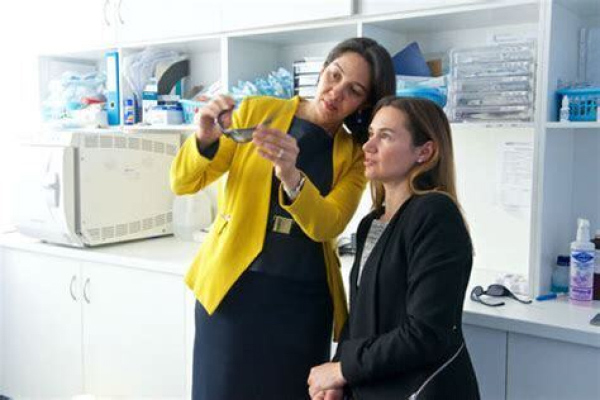
At your appointment, we’ll carefully examine your eyes, discuss your goals, and explain the lens options that may suit your lifestyle. You’ll leave with a clear understanding of your next step and the results you can expect.

STEP 3: ENJOY FREEDOM

After treatment, many people are delighted by how natural and effortless their vision feels. Everyday tasks like reading, driving, or travelling become simpler, often without glasses or contacts. Many wish they had done it sooner.

Take this 2-minute test to see if vision correction could help your reading vision

Find out which treatment options may suit your age, lifestyle, and vision needs with our quick online self-test

Take this 2-minute test to see if vision correction could help your reading vision

Find out which treatment options may suit your age, lifestyle, and vision needs with our quick online self-test

Academic resources on lens replacement surgery

Learn more from authoritative clinical publications. These links will take you off our website

This article outlines Refractive Lens Exchange (RLE): a procedure replacing your eye’s natural lens with an artificial one to treat presbyopia, farsightedness, or high refractive error and reduce dependence on glasses.

Read more

This systematic review and meta-analysis found that enhanced monofocal intraocular lenses provide better intermediate and near vision than standard monofocal lenses after cataract surgery, without increasing visual side effects.

Read more

Cataract and lens replacement surgery involve removing the eye’s natural lens and replacing it with a clear artificial lens to improve vision. These procedures are commonly performed as day surgery and may reduce blur, glare, and reliance on glasses when vision changes interfere with everyday activities.

Read more

Dr Shanel Sharma ophthalmologist in Sydney providing wet macular degeneration and anti-VEGF injection care

Hi, I’m Dr Shanel Sharma

I’m an ophthalmologist with subspecialty training in paediatric eye conditions, strabismus, medical retina and general ophthalmology from leading hospitals in Sydney and London, including Moorfields Eye Hospital. I hold a Fellowship with RANZCO and have published widely in peer-reviewed journals. My focus is providing careful, individualised care using evidence-based treatments. I’m accredited to treat a range of conditions and perform procedures including intravitreal injections, strabismus surgery and botulinum toxin treatments. I always aim to make the process clear, calm and supportive.

Hi, I’m Dr Daya Sharma

I’m a cataract, corneal and refractive surgeon with subspecialty training from Moorfields Eye Hospital in London and Sydney Eye Hospital. I perform laser vision correction procedures, refractive lens surgery, and advanced cataract surgery using the latest diagnostic and surgical technology. My work is focused on helping people reduce their dependence on glasses and improve their quality of vision at all distances. I’m actively involved in research, publication and surgical education, and I take pride in offering honest, thorough guidance to every patient. My approach is personal, careful and always tailored to individual needs and lifestyles.