
Amblyopia (Lazy Eye) in Children
Amblyopia, commonly called “lazy eye,” is a developmental condition where the visual pathways between the eyes and brain do not develop normally during childhood.
Many people assume amblyopia simply means a weak eye. In reality, amblyopia is a neurodevelopmental problem involving how the brain learns to process visual information during early childhood.
Early detection matters because childhood visual development occurs during a limited period of neuroplasticity. If blurred vision is not identified and treated, reduced vision will persist permanently throughout life.
What Is Amblyopia?
Amblyopia occurs when normal visual development does not occur during childhood.
Children are born with the eyes and the visual areas of the brain, but they are not born with the fully developed neural connections between them.
During childhood, approximately two million nerve fibres develop between the eyes and brain. These fibres gradually form the visual system.
The two eyes effectively compete with each other during this developmental period.
Each nerve fibre carries a single specific type of visual information. Some fibres process:
- fine detail
- colour blue
- colour red
- motion fibres
- contrast fibres
This means childhood visual development is much more complex than simply recognising large objects or movement.
A child may notice an aeroplane in the sky because the motion-processing pathways are functioning well. However, this does not necessarily mean the pathways responsible for detailed vision to read the vision chart have developed normally.
Similarly, someone may successfully read a black-and-white newspaper whilst being colour blind.
Different visual functions rely on different neural pathways.
This is one reason each eye must be tested individually during childhood for reading letters. This is usually done by the general practitioner and through the StEPS Vision Screening program in Preschool.
What Causes Amblyopia?
Amblyopia develops when one or both eyes provide blurred or abnormal visual input during childhood.
The brain will favour the eye with clearer vision and form more neural connections with that eye – the other eye will develop fewer connections and has “amblyopia” which is frequently referred to as a “lazy eye”.
Over time, the visual pathways from the weaker eye may fail to develop normally.
Common causes include:
Astigmatism
Significant astigmatism may cause persistent blurred vision during visual development.
If the blur differs between the eyes or affects both eyes significantly, astigmatic amblyopia may develop.
Long-Sightedness (Hyperopia)
Unequal long-sightedness between the eyes may increase the risk of amblyopia.
Strabismus (Eye Misalignment)
If the child has strabismus then the eyes are not aligned. As the child’s brain would experience double vision. To compensate for this, during the period of plasticity – the brain suppresses the image from one eye to avoid double vision. This is known as Strabismic amblyopia.
Congenital Cataract or Other Causes of Visual Obstruction
Any condition blocking clear visual input during childhood may interfere with visual development.
Examples include:
- congenital cataract
- drooping eyelids
- corneal opacity
Can Amblyopia Affect Both Eyes?
Yes.
Many people incorrectly assume amblyopia only affects one eye.
However, if both eyes experience significant blur during childhood, bilateral amblyopia may develop.
This commonly occurs with:
- large astigmatism in both eyes
- high long-sightedness
- significant refractive error affecting both eyes
Because both eyes may appear similar, bilateral amblyopia can sometimes be more difficult for parents to recognise without formal testing.
Why Early Detection Matters
Visual development occurs during a limited period of neuroplasticity, often called the critical period of visual development.
This developmental period generally continues until the brain matures at approximately six to eight years of age. Clinically, many ophthalmologists simplify this by saying the strongest period of visual plasticity occurs until around seven years of age.
If normal visual pathways do not develop adequately during this period, reduced vision may persist permanently later in life.
This is why early diagnosis is so important.
Children often do not complain about blurred vision because they assume the way they see is normal.
Early treatment may help:
- improve visual acuity
- support binocular vision
- improve depth perception
- support reading and learning
- reduce long-term visual impairment
The goal is not simply to prescribe glasses. The goal is to support normal visual pathway development between the eyes and brain.
Signs of Amblyopia in Children
Some children with amblyopia show very few obvious symptoms.
Others may:
- squint
- close one eye
- tilt their head
- struggle with reading
- lose concentration
- complain of headaches
- rub their eyes frequently
- have poor depth perception
- perform poorly at ball sports
- sit very close to screens
However, many children compensate remarkably well using the stronger eye.
This is one reason formal childhood vision testing remains important.
How Is Amblyopia Diagnosed?
Diagnosing amblyopia requires detailed assessment of each eye individually.
Assessment may include:
- visual acuity testing
- cycloplegic refraction
- binocular vision assessment
- ocular alignment testing
- eye health examination
Because children may compensate well, amblyopia can sometimes remain unnoticed without formal testing.
How Is Amblyopia Treated?
Treatment depends on:
- the child’s age
- the underlying cause
- visual acuity
- binocular vision
- associated eye conditions
Treatment may include:
Glasses
Correcting refractive error often forms the first step in treatment.
Patching
Patching the stronger eye may encourage development of the weaker eye.
Atropine Therapy
Atropine drops may sometimes be used as an alternative to patching.
Treatment of Associated Eye Conditions
Some children require treatment of associated conditions such as:
- strabismus
- cataract
- ptosis
Ongoing Monitoring
Visual development occurs gradually and often requires repeated assessment over time.
Consistency with treatment is important because improvement may occur progressively.
Can Laser Eye Surgery Fix Amblyopia?
No.
Laser eye surgery can correct refractive error, but it does not directly reverse amblyopia.
Amblyopia is fundamentally a neurodevelopmental condition involving incomplete visual pathway development during childhood.
If those neural pathways did not form adequately during the critical period of visual development, laser surgery later in life cannot fully rebuild them.
However, once visual development has stabilised and refractive error becomes stable later in adolescence or adulthood, some patients with amblyopia may still be suitable candidates for laser eye surgery to reduce their refractive error. Laser Surgery can include LASIK, SMILE, PRK, ICL or Refractive lens exchange. Dr Daya Sharma will discuss these options after undertaking a clinical assessment to determine which is the best option for each patient.
Realistic expectations remain important because amblyopia may still limit the final visual outcome.
When Should a Child Have an Eye Examination?
A detailed eye examination may be appropriate if a child:
- squints frequently
- struggles at school
- complains of headaches
- sits very close to screens
- has crossed eyes
- fails school vision screening
- has a family history of amblyopia
- shows abnormal visual behaviour
Some children with significant amblyopia appear to function normally because the stronger eye compensates effectively.
Early assessment helps identify potentially treatable causes of reduced visual development while the visual system is still developing.
FAQ SECTION
What is amblyopia?
Amblyopia is a developmental condition where the visual pathways between the eyes and brain fail to develop normally during childhood.
Is amblyopia the same as a lazy eye?
“Lazy eye” is the common term for amblyopia.
Can astigmatism cause amblyopia?
Yes. Significant or unequal astigmatism during childhood may contribute to amblyopia by causing persistent blurred vision during visual development.
Can amblyopia affect both eyes?
Yes. Bilateral amblyopia may occur if significant blur affects both eyes during childhood.
At what age does visual development mature?
The strongest period of visual plasticity generally occurs until approximately six to eight years of age.
Can adults still be treated for amblyopia?
Rarely – Treatment is generally most effective during childhood during the period of visual plasticity.
Can laser eye surgery cure amblyopia?
No. Laser eye surgery can correct refractive error but does not recreate neural pathways that failed to develop during childhood.
Book a consultation
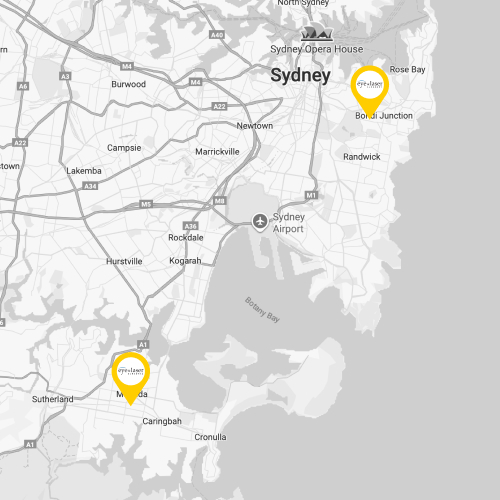
Eye and Laser Surgeons — Bondi Junction & Miranda
Bondi Junction: (02) 9387 5300
Miranda: (02) 9531 5300
Email: reception@eyeandlaser.com.au