

Botox for Strabismus: A Treatment Option for Some Patients with Double Vision
Double vision, also known as diplopia, can occur when the eyes are not properly aligned. This condition, known as strabismus, may make everyday activities such as reading, driving or using a computer difficult.
Many people assume that strabismus surgery is the only treatment option. However, for some patients, Botox injections into specific eye muscles may help improve eye alignment and reduce double vision.
Botox is not a permanent solution for most patients and does not work for every type of strabismus. Nevertheless, in carefully selected cases, it may provide meaningful improvement and help guide future treatment decisions.
At Eye & Laser Surgeons in Sydney, Dr Shanel Sharma and Dr Daya Sharma assess patients with double vision and discuss a range of treatment options, including Botox when appropriate.
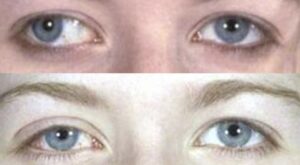
Example of ocular alignment change following botulinum toxin (Botox) injection used to treat strabismus and double vision in selected patients.
What Is Strabismus?
Strabismus occurs when the eyes do not point in the same direction.
Instead of both eyes focusing on the same object, one eye may turn:
- inward (esotropia)
- outward (exotropia)
- upward
- downward
When this happens, the brain may receive two different images, which can result in double vision.
Strabismus can occur in childhood, but it may also develop later in life due to:
- nerve palsies
- muscle imbalance
- trauma
- thyroid eye disease
- neurological conditions
Treatment depends on the cause and severity of the misalignment.
How Botox Works for Strabismus
Botox (botulinum toxin) works by temporarily weakening an overactive eye muscle.
When that muscle relaxes, the opposing muscle can pull the eye into a more balanced position. As a result, eye alignment may improve and double vision may reduce.
The effect typically lasts three to four months.
In some patients, however, the improvement may persist even after the medication wears off. This can occur if the eyes return to a position within the patient’s binocular fusional range, allowing the brain to maintain alignment.
For this reason, Botox can sometimes provide longer-lasting improvement in selected cases.
When Botox May Be Considered
Botox injections may be considered in certain situations, particularly when the deviation is relatively small.
Examples include:
- small-angle strabismus causing double vision
- recent onset diplopia
- nerve palsies affecting eye movement
- situations where surgery may not be appropriate immediately
- using Botox as a temporary trial before surgery
In some cases, Botox can help determine whether improving alignment may relieve symptoms before considering more permanent treatments.
Limitations of Botox Treatment
Although Botox can be helpful for some patients, it is important to understand its limitations.
Botox does not permanently correct strabismus in most patients.
The effect is usually temporary, and some patients may require additional treatment such as:
- prism glasses
- repeat Botox injections
- strabismus surgery
In addition, Botox may be less effective in large-angle deviations or long-standing muscle imbalance.
For this reason, a careful clinical assessment is necessary to determine whether Botox is appropriate.
Other Treatment Options for Strabismus
Treatment for strabismus depends on the underlying cause, the size of the eye misalignment, and whether double vision is present. In many cases, several options may be considered before deciding on the most appropriate approach. There are always 5 options that we considering treatment options.
1. Observation – Do nothing
Some patients have very small eye deviations that cause minimal symptoms. In these situations, careful observation may be appropriate, particularly if the condition is stable.
Regular eye examinations allow the ophthalmologist to monitor the alignment of the eyes and ensure that the deviation is not worsening or beginning to cause double vision.
2. Glasses or Prism Correction
In some patients, glasses alone can help improve eye alignment. This is particularly true when the misalignment is related to focusing problems.
Prism lenses can also be incorporated into glasses. These lenses help redirect light entering the eye so that images from each eye align more closely, which can reduce or eliminate double vision.
Prism correction can be especially helpful for small-angle strabismus or for patients who develop double vision later in life.
3. Botox Injections
Botox injections may be used to temporarily weaken an overactive eye muscle.
By relaxing one muscle, the opposing muscle can pull the eye toward a more balanced position. In some patients, this may reduce double vision or improve eye alignment.
The effect of Botox typically lasts three to four months. However, in some cases the improvement in alignment may persist after the medication wears off.
Botox may be considered in situations such as:
- small-angle strabismus
- recent onset double vision
- certain nerve palsies affecting eye movement
- situations where surgery may not be immediately appropriate
4. Strabismus Surgery
Strabismus surgery aims to adjust the position or strength of the eye muscles in order to improve eye alignment.
During the procedure, the surgeon may reposition or alter the tension of one or more muscles to help the eyes point in the same direction.
Surgery may be recommended when the eye deviation is larger, when double vision is persistent, or when other treatments have not provided sufficient improvement.
5. Occlusion
In some cases, covering one eye with a patch or using an occlusive lens may help eliminate double vision.
This approach works by preventing the brain from receiving two competing images. Occlusion is sometimes used as a temporary solution, particularly when other treatments are not suitable or while further assessment is taking place.
Research on Botox for Strabismus & Quality of Life
Botulinum toxin (Botox) was originally developed as a treatment for strabismus, long before it became widely known for cosmetic applications.
In the 1970s, ophthalmologist Dr Alan B. Scott’s early experimental work demonstrated that targeted injections could selectively weaken extraocular muscles, which could improve eye alignment in certain types of strabismus.
Since the 1980’s, botulinum toxin has been used as a recognised treatment option for selected patients with strabismus and double vision, particularly in cases involving small-angle deviations or nerve palsies.
Research has also examined the impact of maintaining ocular alignment with botulinum toxin on patient quality of life.
Dr Shanel Sharma published in the British Journal of Ophthalmology the effect of long-term botulinum toxin A injections used to maintain ocular alignment in adults with strabismus. The study found that maintaining alignment with periodic Botox injections was associated with improvements in visual function and quality of life for some patients with persistent strabismus and double vision.
This work highlights that the goal of treatment is not only to improve eye alignment, but also to support daily visual function and overall quality of life.
While results vary between individuals, this research supports Botox as a recognised treatment option in selected cases.
Strabismus and Double Vision Assessment in Sydney
Patients experiencing double vision benefit from a detailed examination to determine the underlying cause.
At Eye & Laser Surgeons, patients undergo a comprehensive eye assessment to evaluate eye alignment and binocular vision.
Dr Shanel Sharma is a specialist ophthalmologists who assess and manage patients with strabismus and double vision, including the use of Botox injections when appropriate.
Consultations are available at clinics in:
- Bondi Junction
- Miranda
These locations provide access to specialist eye care for patients across Sydney and Miranda.
Frequently Asked Questions
Can Botox permanently fix strabismus?
Botox temporarily relaxes specific eye muscles. In some cases, eye alignment may remain improved after the medication wears off, although additional treatment may still be required.
Is Botox painful?
Botox injections are performed using a very fine needle. Most patients experience only mild discomfort during the procedure.
How long does Botox last for strabismus?
The effect usually lasts around two to four months, although results vary between patients.
Is strabismus surgery always necessary?
Not always. Some patients may benefit from observation, glasses with prism correction, or Botox injections before considering surgery.
What is the cost of Botox?
Botox treatment typically costs around 10% of the cost of strabismus surgery. Eligible patients may be able to claim a Medicare rebate. As the procedure is performed in our rooms, private health insurance does not usually contribute to the cost.
Book a Consultation
To discuss treatment options for double vision or strabismus, book a strabismus consultation with Dr Shanel Sharma
Eye and Laser Surgeons — Bondi Junction & Miranda
Bondi Junction: (02) 9387 5300
Miranda: (02) 9531 5300
Email: reception@eyeandlaser.com.au
Find out if you are suitable for vision correction
Not everyone is eligible for vision correction surgery.
Find out if you could benefit from this life changing surgery by taking the quick self-suitability quiz below: