




Find a new way forward from dry macular degeneration with MacuMira in Sydney

Discover how this gentle, noninvasive treatment uses microcurrent stimulation to support retinal function and help patients see more clearly

Find a new way forward from dry macular degeneration with MacuMira in Sydney

Discover how this gentle, noninvasive treatment uses microcurrent stimulation to support retinal function and help patients see more clearly

Discover how MacuMira offers a new treatment option for dry macular degeneration

Explore the key facts about this drug-free treatment and how it may help support clearer, more usable vision
MacuMira is a non-invasive microcurrent treatment used in some patients with dry macular degeneration. It delivers gentle electrical stimulation through closed eyelids and is designed to support retinal cell function and visual performance. MacuMira does not cure dry AMD or reverse established retinal damage, but it may be considered as part of a personalised management plan in selected patients to try and improve the function of the remaining cells.

MacuMira is a non-invasive TGA approved, medical device that delivers a gentle electrical stimulation to the eye through the closed eyelids. It does not involve surgery and does not involve injections. Treatment is generally well tolerated and is performed while you sit comfortably in the office with your eyes closed.

For patients looking for a treatment option for dry macular degeneration, MacuMira may be discussed as part of a broader retinal care plan.

MacuMira may be considered in selected patients with dry macular degeneration, particularly those who experience:

  • reduced central clarity
  • difficulty reading fine print
  • reduced contrast sensitivity
  • increased visual fatigue

Dry macular degeneration is a complex condition, and there is no single treatment that is appropriate for everyone. Treatment suitability depends on retinal findings, the stage of disease, and whether other treatments or monitoring strategies are more appropriate.

The retina is a highly active tissue and requires a large amount of energy to function well. In dry macular degeneration, retinal cells can gradually become less efficient and may struggle to meet their energy demands.

MacuMira uses microcurrent stimulation to help the remaining cells work as well as possible to improve visual function by supporting normal retinal cellular activity, including:

  • supporting energy use within retinal cells
  • helping surviving retinal cells work more efficiently
  • improving aspects of visual function and visual contrast

This is why MacuMira is usually discussed as a treatment option to support retinal function. It can not reverse structural retinal loss or prevent the progression of macular degeneration.

MacuMira treatment typically begins with an initial loading phase of four treatment sessions within 10 days. Each session lasts approximately 40 minutes and is delivered through closed eyelids while the patient sits comfortably.

After the initial phase, maintenance treatments are usually given every 2 to 3 months.

This makes MacuMira different from many retinal treatments because it is:

  • non-invasive
  • injection-free
  • performed as a series of outpatient treatment sessions

It is important to have realistic expectations.

MacuMira may aim to:

  • support remaining retinal cell activity
  • improve aspects of visual performance
  • improve contrast-related function in selected patients

MacuMira does not:

  • claim to stop progression of dry macular degeneration
  • reverse established retinal damage
  • cure dry macular degeneration

Patients considering MacuMira should understand that it is a functional support therapy, not a regenerative treatment. The aim is to help the remaining cells work as well as possible to improve visual function.

Clinical research into microcurrent therapy for dry macular degeneration is still evolving. In addition to formal clinical studies, MacuMira has been used in more than 4,000 patients in Canada, with many thousands of treatments delivered. In real-world practice, some patients have reported improvements in activities such as reading comfort and contrast perception.

At the same time, results vary between individuals, and improvement is not guaranteed. Many patients have noticed some improvement in their vision.

That is why treatment should always be discussed in the context of a full retinal assessment, rather than as a stand-alone solution.

No.

MacuMira is not a cure for dry macular degeneration. It does not stop disease progression in all patients and does not replace standard monitoring, AREDS2 supplementation where appropriate, or treatment of wet macular degeneration if it develops.

This is one of the most important points for patients to understand before starting treatment.

Before considering microcurrent therapy, patients should undergo:

  • a comprehensive retinal examination
  • Optical Coherence Tomography (OCT)
  • Fundus Autofluorescence (FAF) imaging where appropriate
  • confirmation that wet macular degeneration is not present
  • discussion of realistic expectations and treatment goals

The most important first step is always a clear diagnosis and a discussion with your ophthalmologist about the most appropriate management plan.

MacuMira should be viewed within the broader management of dry macular degeneration.

That broader approach may include:

  • regular retinal monitoring
  • OCT imaging
  • AREDS2 supplementation in selected patients
  • diet and lifestyle measures
  • treatment of wet macular degeneration if it develops
  • advanced dry AMD treatments such as geographic atrophy therapies when appropriate

MacuMira may be considered as an adjunctive option for selected patients rather than a replacement for established retinal care.

Patients in Sydney who are concerned about dry macular degeneration often begin with an optometrist assessment and are then referred for specialist review if needed.

At Eye & Laser Surgeons, patients can undergo retinal assessment and imaging to determine:

  • whether the diagnosis is stable dry AMD
  • whether wet AMD has developed
  • whether MacuMira may be appropriate as part of a personalised care plan

Macular degeneration is a complex retinal condition that requires careful diagnosis and ongoing monitoring.

Ophthalmologists at Eye & Laser Surgeons provide assessment and management of retinal conditions using modern retinal imaging and evidence-based treatment approaches.

Dr Shanel Sharma BSc(Med) MBBS FRANZCO GAICD MBA (Exec) AGSM and
Dr Daya P Sharma BSc(Hons) MBBS MSc GAICD MBA (Exec) are ophthalmologists and eye surgeons.

Both trained in medicine at the University of New South Wales, completed ophthalmology training at Sydney Eye Hospital, and undertook fellowship training at Moorfields Eye Hospital in London.

What is MacuMira used for?

MacuMira is used in some patients with dry macular degeneration as a non-invasive microcurrent therapy designed to support retinal function and visual performance. It does not involve surgery or injections.

Does MacuMira involve injections?

No. MacuMira is an injection-free treatment delivered through closed eyelids using gentle electrical stimulation.

Is MacuMira painful?

No, MacuMira is generally well tolerated.

Can MacuMira reverse dry macular degeneration?

No. MacuMira does not reverse established retinal damage and does not claim to stop progression of dry AMD.

Who should have a retinal assessment before treatment?

Anyone considering MacuMira should first have a comprehensive retinal examination, OCT imaging, and confirmation that wet macular degeneration is not present.

Is MacuMira suitable for everyone with dry AMD?

No. Suitability depends on retinal findings, disease stage, and overall treatment goals. Dry macular degeneration is a complex condition, and there is no single treatment that works for everyone.

GAIN VISUAL FREEDOM IN 3 EASY STEPS

Eye treatment options can be confusing, we’ve made the path to healthier vision easy to follow

STEP 1: GET IN TOUCH

Every eye is different. The first step is to find out which treatment could help you see more clearly and protect your long-term vision. Call our caring team or use our online calendar to book an appointment.
STEP 2: WE’LL MEET

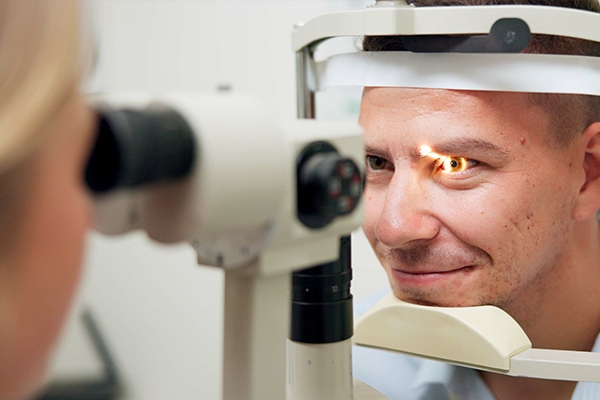
During your appointment, we’ll examine your eyes and explain which treatment options may suit your condition and lifestyle. You’ll receive expert advice and a clear, personalised plan.

STEP 3: ENJOY FREEDOM

After treatment, many people feel relief knowing their eyes are healthier and their sight is clearer. With proper care, you can look forward to years of confident, comfortable vision.


Take the first step toward clearer, healthier vision

Book an appointment to learn more about your eyes and the treatment options that may suit you

Take the first step toward clearer, healthier vision

Book an appointment to learn more about your eyes and the treatment options that may suit you

Hi, I’m Dr Daya Sharma

I’m a cataract, corneal and refractive surgeon with subspecialty training from Moorfields Eye Hospital in London and Sydney Eye Hospital. I perform laser vision correction procedures, refractive lens surgery, and advanced cataract surgery using the latest diagnostic and surgical technology. My work is focused on helping people reduce their dependence on glasses and improve their quality of vision at all distances. I’m actively involved in research, publication and surgical education, and I take pride in offering honest, thorough guidance to every patient. My approach is personal, careful and always tailored to individual needs and lifestyles.

Hi, I’m Dr Shanel Sharma

I’m an ophthalmologist with subspecialty training in paediatric eye conditions, strabismus, medical retina and general ophthalmology from leading hospitals in Sydney and London, including Moorfields Eye Hospital. I hold a Fellowship with RANZCO and have published widely in peer-reviewed journals. My focus is providing careful, individualised care using evidence-based treatments. I’m accredited to treat a range of conditions and perform procedures including intravitreal injections, strabismus surgery and botulinum toxin treatments. I always aim to make the process clear, calm and supportive.