

Seeing Well Is Important. Knowing Your Eyes Are Healthy Matters Too.
Elite athletes spend years developing strength, endurance, technique, coordination and decision-making.
Yet one aspect of athlete care can easily be overlooked: the health of the eyes themselves.
An athlete may have exceptional eyesight, read considerably better than 6/6 and have no obvious visual symptoms. However, this does not necessarily mean that every structure within the eye is healthy.
At Eye & Laser Surgeons, Dr Daya Sharma and Dr Shanel Sharma believe athlete eye care should begin with two different questions:
How well does the athlete see?
and
Are the eyes responsible for that vision healthy?
Although these questions are related, they are not the same.
Our Sports Vision Sydney programme explores visual performance, including dynamic and kinetic visual acuity, contrast sensitivity, binocular vision and other aspects of seeing during sport.
In contrast, this page focuses on the other side of the equation: athlete eye health.
Our role is to examine the structures responsible for vision, identify clinically meaningful abnormalities and explain whether anything requires correction, monitoring, further investigation, treatment or simply observation.
What Is an Athlete Eye Health Assessment?
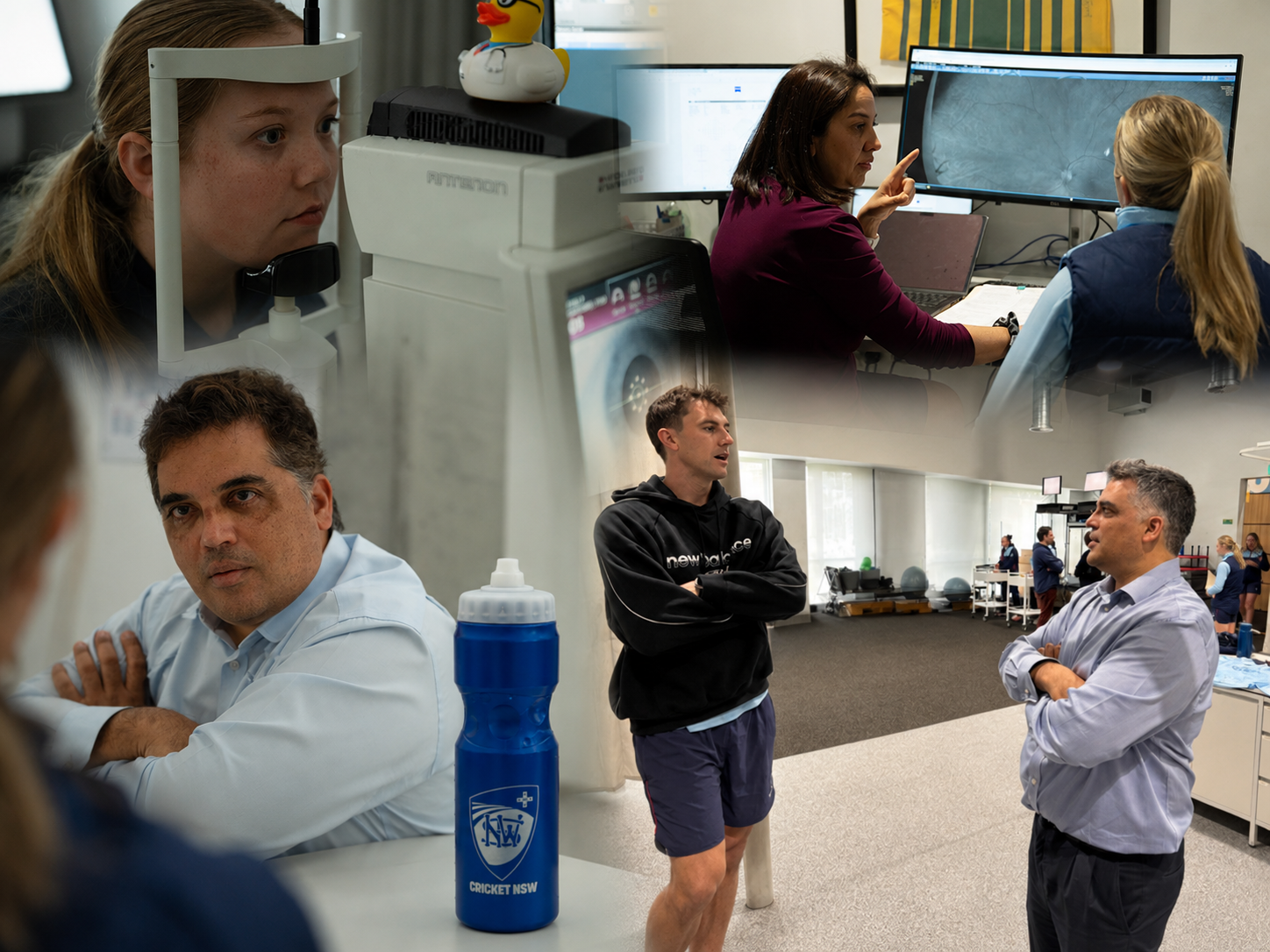
Comprehensive sports vision assessment combines detailed eye-health examination, advanced ophthalmic imaging and an understanding of the visual demands of elite sport.
An athlete eye health assessment is a comprehensive ophthalmic examination adapted to the individual athlete.
It looks beyond the question of whether someone can read an eye chart.
Depending on age, symptoms, prescription, family history, contact-lens use, previous eye injury and the demands of the sport, assessment may include:
- visual acuity and detailed refraction
- assessment for myopia, hyperopia and astigmatism
- slit-lamp examination of the front of the eye
- ocular-surface and tear-film assessment
- corneal examination and imaging where appropriate
- eye-pressure measurement
- optic-nerve assessment
- dilated retinal examination
- macular assessment
- Optical Coherence Tomography (OCT) where indicated
- Optos ultra-widefield retinal imaging provides an important view of the eye.
- peripheral retinal examination
- additional testing when a clinical finding needs investigation
Importantly, not every athlete needs every test. Instead, we believe technology should answer meaningful clinical questions rather than generate measurements simply because the technology is available.
Excellent Vision Does Not Always Mean Healthy Eyes
This distinction is important.
Some potentially sight-threatening eye diseases can develop quietly. As a result, a person may function normally, train normally and even have excellent central visual acuity while disease is developing elsewhere in the visual system.
Glaucoma is an important example
Glaucoma damages the optic nerve. In its most common forms, the disease often progresses gradually and without pain.
Importantly, glaucoma usually affects peripheral vision before central vision.
As a result, someone may continue to read an eye chart well while slowly losing part of their visual field. By the time they become aware of the change, irreversible optic-nerve damage may already have occurred.
Therefore, simply asking, “Can you see clearly?” cannot exclude glaucoma.
Where clinically appropriate, glaucoma testing may include:
- measurement of eye pressure
- examination of the optic nerve
- OCT imaging of the retinal nerve fibre layer and ganglion cells
- visual-field testing
- corneal-thickness measurement
- assessment of the drainage angle
No single test diagnoses glaucoma on its own.
Furthermore, eye pressure is only one part of the picture. Glaucoma can occur in people whose measured eye pressure falls within the statistically normal range. Conversely, some people develop elevated eye pressure — known as ocular hypertension — without developing glaucoma or optic-nerve damage.
For these reasons, good visual acuity does not exclude eye disease, and regular eye examinations should form part of an athlete’s long-term health care.
The purpose is not to create anxiety or suggest that every athlete needs glaucoma investigations.
Rather, it illustrates a fundamental principle:
Good visual acuity does not exclude eye disease and getting your eyes checked should be a part of an athletes long-term health care.
Why Baseline Eye Health Can Matter in Elite Sport
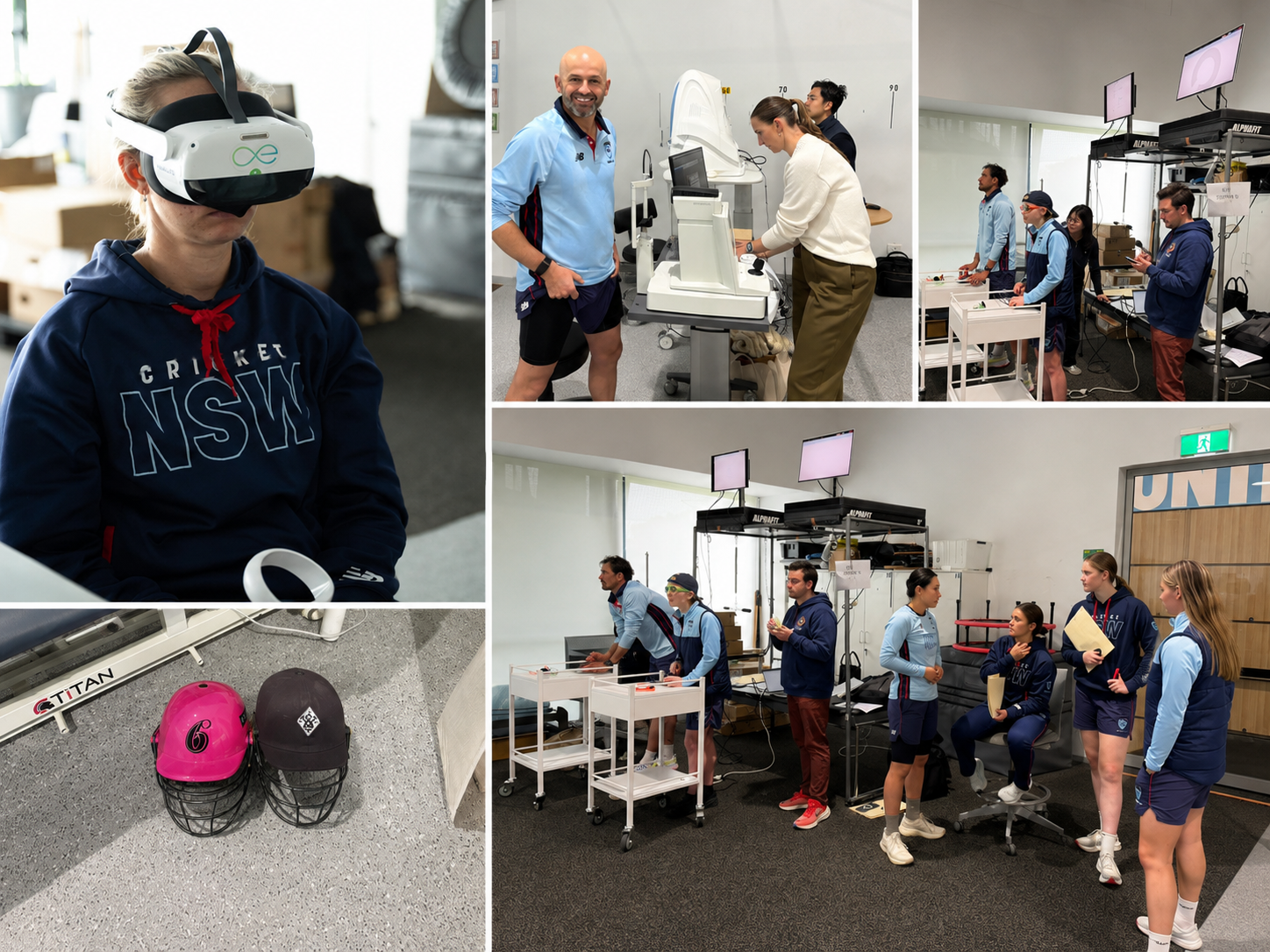
The Cricket Vision Project brings together ophthalmic assessment and specialised visual testing to explore eye health and visual function in elite cricketers.
An elite sporting career may span many years.
During that period, an athlete’s prescription, retina, optic nerve, cornea and ocular surface can change.
A well-documented ophthalmic assessment can therefore establish useful baseline information.
If symptoms arise or a measurement changes later, previous imaging and clinical findings may help us determine whether something genuinely has changed or represents that individual’s normal anatomy.
However, this does not mean every athlete needs repeated advanced imaging. Instead, monitoring should remain proportionate to the person’s findings and individual risk.
For some athletes, reassurance and routine review may be all that is required. In others, an unexpected finding may justify closer surveillance or additional investigation to support long-term eye health and vision.
Refraction: Is There a Correctable Optical Limitation?
Refraction determines whether myopia, hyperopia or astigmatism is affecting vision.
The significance of a prescription depends on more than its numerical size.
For example, a small refractive error may make little practical difference for one person yet be more relevant to someone performing a visually demanding task.
Therefore, our role is first to establish whether correction produces a meaningful improvement.
The appropriate solution may be:
- no correction
- spectacles
- contact lenses
- another form of optical correction
- refractive surgery for a suitable adult who wishes to explore that option
For a deeper discussion of refractive error and sporting visual performance, visit our Sports Vision Sydney guide.
The Cornea, Tear Film and Ocular Surface
The front of the eye is an important part of the optical system.
A healthy tear film creates the first refracting surface through which light enters the eye. Consequently, instability of the tear film can sometimes produce variable vision even when a glasses prescription appears correct.
Athletes may train for prolonged periods in:
- wind
- dry environments
- dust
- air conditioning
- outdoor heat
- chlorinated water
In addition, some athletes wear contact lenses for many hours during training and competition.
Where appropriate, we assess the ocular surface and dry eye, contact-lens effects and tear-film stability.
We may also use corneal topography and tomography to understand corneal shape, astigmatism or possible corneal disease like keratoconus that can impact teens – young adults.
Moreover, this assessment becomes particularly important if an athlete is considering laser vision correction.
The Retina: Good Central Vision Does Not Tell Us Everything
The retina lines the back of the eye and converts light into neural signals.
Its central region, the macula, supports detailed central vision. However, much of the retina lies outside this small central area.
An athlete can therefore have excellent central visual acuity while having an abnormality elsewhere in the retina.
Therefore, a dilated retinal examination allows us to assess the retina directly. In addition, where appropriate, imaging can help document retinal anatomy and provide measurements for future comparison.
Sport, Eye Trauma and the Peripheral Retina
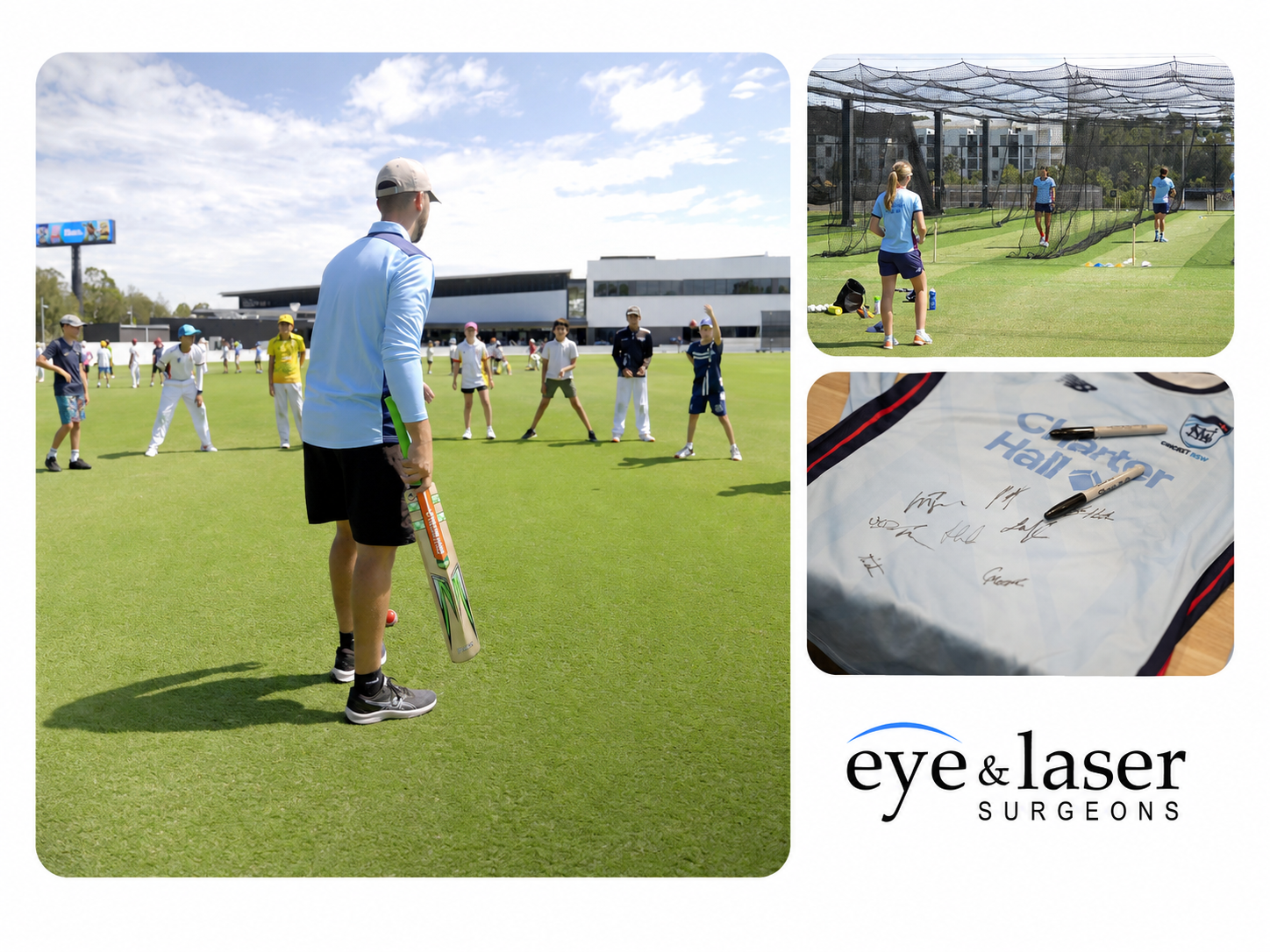
Cricket requires athletes to track movement, judge distance and respond rapidly to changing visual information.
Eye trauma deserves particular attention in sport.
Importantly, the degree of risk varies substantially between sports. Therefore, we should not suggest that every athlete has an increased risk of retinal tears. However, direct blunt trauma to the eye can produce serious posterior-eye injuries.
A 2025 review of vitreoretinal injury associated with sports-ball ocular trauma described injuries including retinal haemorrhage, retinal tears, retinal dialysis, giant retinal tears, retinal detachment, choroidal rupture and traumatic macular injury.
The mechanism depends partly on the size, mass and velocity of the object striking the eye.
If the tear is recognised when it is just a tear in the retina – PRP laser often can sort out the area of weakness. If it progresses to a retinal detachment, significant surgery – vitrectomy is often required to regain the vision and usually within 2 years cataract surgery is then also required.
Repeated ocular trauma can also matter
Evidence from combat sport demonstrates why this cannot be ignored.
In a classic ophthalmic study, 74 licensed boxers underwent complete dilated eye examinations. Retinal tears were identified in 24% of the boxers studied, and retinal tears were significantly more common in the boxers than in the comparison group.
Importantly, this result applies to the population that was studied. It should not be interpreted to mean that one in four athletes — or one in four cricketers — will develop a retinal tear.
Rather, the study demonstrates the potential consequences of repeated ocular trauma and why sport-specific risk matters.
Read the Ophthalmology study on ocular complications of boxing.
For us, the broader message is straightforward:
Sporting visual assessment should consider not only performance, but also whether the sport exposes the eyes to clinically meaningful trauma risk.
Flashes and Floaters After Sport or Eye Trauma
Athletes should know which symptoms deserve prompt attention.
The vitreous gel inside the eye can pull on the retina. Sometimes this produces flashes or floaters without causing retinal damage. However, in some cases the traction can create a retinal tear.
A retinal tear can allow fluid to pass beneath the retina and potentially lead to retinal detachment.
New symptoms that should be assessed promptly include:
- a sudden onset or increase in floaters
- new flashing lights
- a shadow or curtain in the vision
- sudden loss of peripheral vision
- unexplained reduction in vision after ocular trauma
This is particularly important following a significant blow to the eye.
Our guide to flashes and floaters, retinal tears and retinal warning symptoms explains these symptoms in greater detail.
Some injuries produce obvious symptoms, while others can be less apparent initially. Therefore, the need for examination after trauma depends on the mechanism of injury, symptoms and clinical circumstances.
The Optic Nerve: Looking Beyond Eye Pressure
The optic nerve carries visual information from the retina to the brain.
We assess its appearance as part of a comprehensive ophthalmic examination.
Where clinically indicated, OCT can provide detailed measurements of structures such as the retinal nerve fibre layer and ganglion-cell layer.
However, an OCT scan is not a diagnosis.
We interpret imaging alongside:
- the clinical examination
- eye pressure
- the visual field
- corneal thickness
- drainage-angle anatomy
- family history
- other risk factors
Taken together, these measurements are particularly important when assessing possible glaucoma.
You can learn more about comprehensive glaucoma testing in Sydney and our broader approach to glaucoma diagnosis, monitoring and treatment options of Selective Laser trabeculoplasty, (SLT) Vs glaucoma eye drops.
Cricket NSW: Athlete Eye Health in Practice
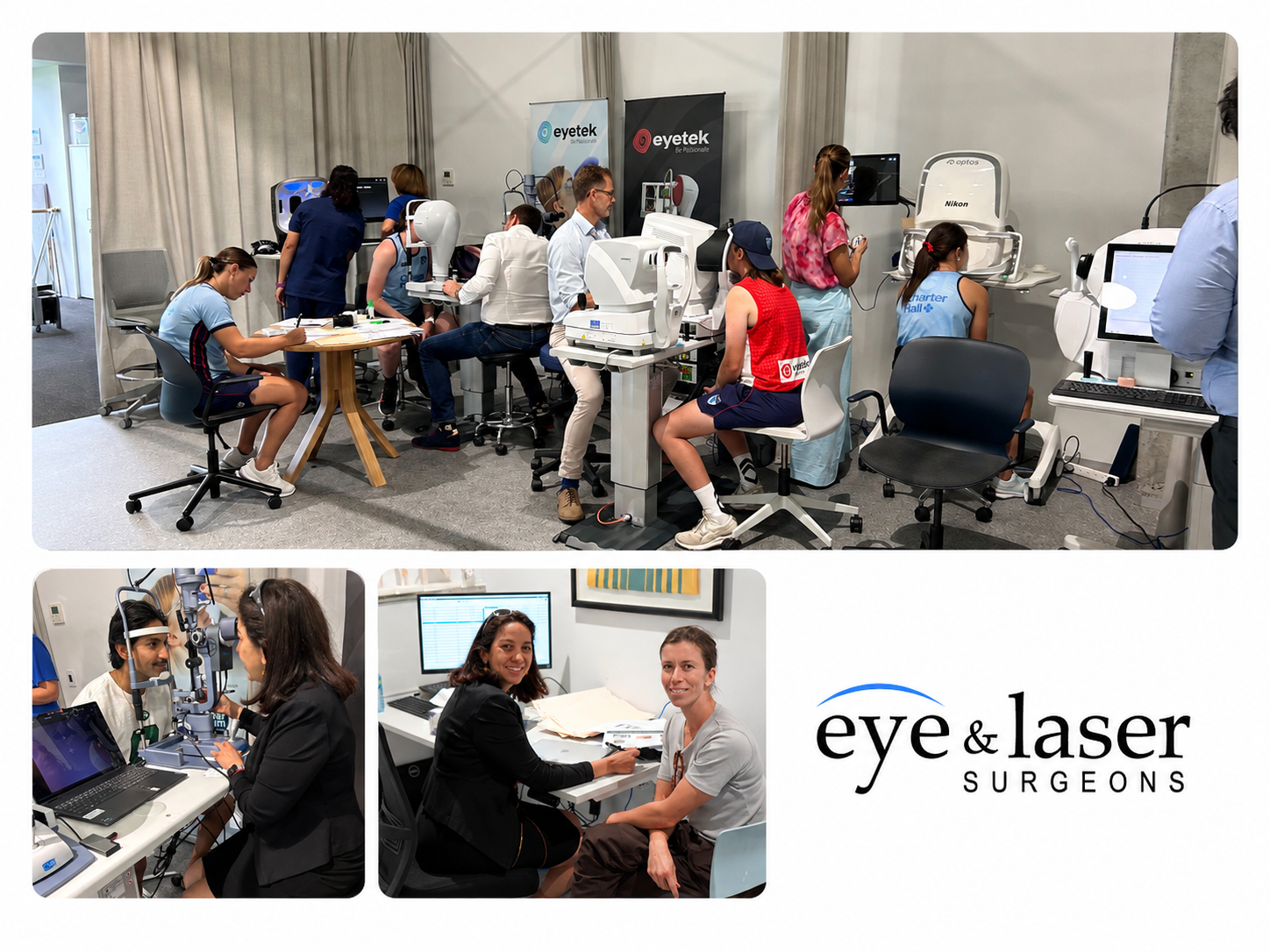
Comprehensive ophthalmic assessment can examine both visual function and long-term eye health in athletes.
Cricket provides an interesting model because it combines demanding visual performance with long-term exposure to a fast-moving ball.
Through our work with Cricket NSW and Cricket Australia, Dr Daya Sharma and Dr Shanel Sharma have been involved in comprehensive ophthalmic assessment of elite cricketers.
Our programme has allowed us to consider two complementary questions:
Are the athlete’s eyes healthy?
and
How can we better understand vision under the demands of elite sport?
The eye-health component has included detailed refraction and clinical examination together with retinal, macular, optic-nerve, corneal and ocular-surface assessment where appropriate. In parallel, our sports-vision work investigates how athletes use vision during sporting performance.
Importantly, we keep these questions distinct. Eye-health assessment is established clinical care, whereas the relationship between some specialised visual-performance measurements and sporting outcomes remains an evolving area of research.
The Cricket Vision Project: Collaboration, Technology and Research
The broader Cricket Vision Project brings together ophthalmology, sport, technology and research.
However, this work would not be possible through clinical expertise alone. Collaboration with Cricket NSW and organisations contributing imaging, visual-assessment technology, research capability and clinical infrastructure allows us to investigate the athlete’s visual system from multiple perspectives.
Those collaborators have included ZEISS, Optos, Heidelberg Engineering, ParagonCare Vision, MyopAI and Bondi Laser Eye Centre.
Our dedicated Cricket Vision Project article explains:
- why the project was developed
- how the athletes were assessed
- what different technologies contributed
- why eye-health screening matters
- how sports-vision performance differs from ordinary visual-acuity testing
- what questions remain unanswered
- how artificial intelligence may contribute to future research
- how collaboration between clinicians, sporting organisations and technology groups can support better research
Explore the Cricket Vision Project and our collaboration with Cricket NSW and ophthalmic technology partners.
Technology Helps Us See More — Clinical Judgement Tells Us What Matters
Modern ophthalmology can generate an extraordinary amount of information.
OCT can provide high-resolution cross-sectional imaging of the retina and optic nerve.
Ultra-widefield retinal imaging can document a much larger area of the retina than conventional central retinal photography.
Corneal imaging can help us understand corneal shape and optical characteristics.
Wavefront and other optical measurements can examine aspects of visual quality that are not fully described by a standard glasses prescription.
Nevertheless, more data does not automatically mean better care.
Our role is to determine:
What are we trying to understand?
Which test can answer that question?
Does the result change what we recommend?
Ultimately, technology supports clinical decision-making; it does not replace an ophthalmologist’s examination, interpretation or judgement.
Athlete Eye Health and Sports Vision Are Different — and Complementary
It is useful to separate two concepts.
Athlete eye health asks:
- Is the retina healthy?
- Is the optic nerve healthy?
- Is the cornea healthy?
- Is there a meaningful refractive error?
- Are there ocular-surface problems?
- Are there glaucoma risk factors?
- Is there evidence of previous eye trauma?
- Does anything require treatment or monitoring?
Sports vision asks:
- How does the athlete see moving targets?
- What is their kinetic or dynamic visual acuity?
- How do they perform under different contrast conditions?
- How do the eyes work together?
- How effectively do they process visual information during sport?
Although these areas naturally overlap, but they have different purposes.
For detailed information about visual-performance testing, visit Sports Vision Sydney: Vision Testing and Performance Assessment for Athletes.
What Happens If We Find Something?
Finding an abnormality does not automatically mean treatment is required. In some cases, observation is the most appropriate recommendation.
For athletes, a refractive error may be managed with glasses, contact lenses or, where suitable, laser vision correction.
Similarly, an ocular-surface problem may respond to treatment or changes in contact-lens use or by addressing their dry eye. A retinal finding, however, may require follow-up, further investigation or a treatment. Meanwhile, an optic-nerve finding may lead to additional glaucoma testing.
Where treatment is appropriate, we explain why. Equally importantly, where treatment is unnecessary, we explain that too.
Our goal is to help athletes understand their eyes and make informed decisions rather than to find a procedure for every finding.
Vision Correction for Athletes
Some adult athletes wish to reduce their dependence on glasses or contact lenses.
Following detailed assessment, suitable options may include LASIK, SMILE, PRK, ICL or another form of refractive correction.
Therefore, the appropriate approach depends on the athlete’s eyes, sporting demands and personal priorities rather than the procedure alone.
We may need to consider:
- prescription
- corneal shape and thickness
- tear-film health
- retinal health
- age
- sport
- likelihood of ocular trauma
- recovery requirements
- visual priorities
- alternatives to surgery
For patients considering treatment, our Laser Eye Surgery Sydney cornerstone guide explains the major procedures, while our Vision Correction for Work, Sport & Active Lifestyles resource considers how occupational and sporting requirements can influence decision-making.
Athletes can also explore our dedicated guide to laser vision correction for athletes.
Research, Artificial Intelligence and the Future of Athlete Eye Health
The challenge in modern eye care is increasingly not a shortage of data.
It is understanding which data matters.
Ophthalmic imaging, corneal measurements, visual-performance testing and other technologies can produce very large datasets.
Artificial intelligence may help researchers identify relationships within these data that would be difficult to recognise by examining individual measurements alone.
Although this is an area of considerable potential, it also requires scientific discipline. For example, a statistical association does not necessarily establish that a measurement affects sporting performance.
From Elite Sport to Everyday Eye Care
Elite athletes provide an unusual opportunity to study eyes operating under demanding conditions.
However, the principle behind our work applies to every patient.
Every person deserves to understand their eyes.
A professional cricketer, pilot, surgeon, tradies, emergency personnel, cyclist, swimmer or parent may have very different visual priorities.
Nevertheless, our clinical process begins in the same place.
Our clinical process therefore begins by understanding the person and examining the eyes carefully. From there, we explain what we find and what it may mean. Only then do we discuss whether correction, monitoring, further investigation or treatment may be appropriate.
Then, and only then, do we discuss whether correction, monitoring or treatment may be appropriate.
Frequently Asked Questions About Athlete Eye Health
Can an athlete have excellent vision but still have an eye disease?
Yes. Standard visual acuity measures how clearly someone sees a high-contrast target centrally. It does not exclude retinal, optic-nerve, corneal or other eye disease. Glaucoma is an important example because peripheral vision can deteriorate before central visual acuity is noticeably affected.
Can glaucoma develop without an athlete knowing?
Yes. The common forms of glaucoma can progress gradually without pain or obvious early symptoms. By the time a person notices visual-field loss, irreversible optic-nerve damage may already have occurred. Appropriate examination and glaucoma testing can identify risk or disease earlier.
Does normal eye pressure exclude glaucoma?
No. Elevated pressure is an important glaucoma risk factor, but glaucoma can also occur when measured eye pressure falls within the normal range. Assessment therefore considers the optic nerve, visual field and other risk factors as well as pressure.
Are athletes at increased risk of retinal tears?
Not all athletes are at increased risk. Risk varies according to the individual and the sport. However, significant blunt ocular trauma can cause retinal tears, retinal dialysis and retinal detachment. Sports involving repeated or high-energy impact to the eye deserve particular consideration.
Can a cricket ball damage the retina?
A direct high-energy impact from a sports ball can potentially damage structures at the back of the eye. The resulting injury depends on factors including the force, location and mechanism of impact. Any significant eye trauma accompanied by visual symptoms should be appropriately assessed.
What are the warning symptoms of a retinal tear or detachment?
New flashes, a sudden increase in floaters, loss of peripheral vision or a curtain-like shadow can sometimes indicate a retinal tear or detachment. These symptoms warrant prompt assessment. Learn more in our guide to flashes and floaters.
Does every elite athlete need OCT or retinal imaging?
No. Testing should be guided by clinical findings, risk factors, symptoms and the reason for the assessment. Advanced imaging can provide valuable information, but it should complement clinical examination rather than replace it.
Why establish baseline eye measurements?
Baseline examination and imaging can provide a reference point for future comparison. This may be useful if an athlete develops symptoms, experiences trauma or shows a change in an ophthalmic measurement later.
Is athlete eye-health assessment the same as sports vision testing?
No. Athlete eye-health assessment focuses primarily on the health of the eye and clinically meaningful visual findings. Sports vision testing examines visual abilities used during athletic performance. The two areas complement each other.
Can athletes consider laser eye surgery?
Some adult athletes may be suitable for laser vision correction or another refractive procedure. Others may be better served by spectacles, contact lenses or no intervention. Suitability depends on detailed examination and the individual’s eyes, sport and visual priorities.
What is the Cricket Vision Project?
The Cricket Vision Project brings together comprehensive ophthalmic assessment, sports-vision research and collaboration with Cricket NSW and participating technology and clinical partners. The programme explores both athlete eye health and questions surrounding visual function in elite cricket.
Understanding the Athlete’s Eyes Comes First
Elite sport teaches us an important lesson about vision.
Seeing clearly is important.
However, clear vision is only one part of healthy vision.
Therefore, our role is to assess the entire eye, explain what we find and help each athlete understand whether correction, observation, further investigation, monitoring or treatment may be appropriate.
We explain before we recommend.
Book an Athlete Eye Health Assessment
If you would like to understand your eye health, prescription and individual visual needs, you can arrange a comprehensive ophthalmic assessment with Eye & Laser Surgeons.
Book an appointment to understand your eyes, your eye health and the options that may be appropriate for you.