




Vision Correction for Active Lifestyles, sport & work.
The best laser vision correction option isn’t determined by your prescription alone.
Many people begin exploring laser vision correction because glasses or contact lenses interfere with work, sport, travel or everyday life and get caught up in the procedures SMILE, LASIK, PRK, Wavefront PRK, ICL or refractive lens exchange.
Before recommending any treatment, however, we first need to understand your eyes, prescription and long-term visual goals.
For this reason, a comprehensive assessment is the first and most important step.
How you use your vision every day can be just as important as how clearly you see the eye chart.
Whether you spend your days working on a computer, operating in theatre, flying an aircraft, playing competitive sport or simply enjoying an active lifestyle, your visual needs are unique.
Our role is not simply to recommend a procedure. Our goal is to understand how you live, work and use your vision so that together we can determine the most appropriate option for your individual circumstances. However, suitability depends on your eyes, your prescription and your long-term visual goals. Therefore, a detailed discussion of your lifestyle, sporting activities and other lifestyle factors as well as an eye assessment is the first step. These are the components that we consider during the appointment and through the assessment.
Vision Correction for Active Lifestyles:
At a Glance:
Many people considering laser eye surgery ask:
- Will I still need glasses?
- Which procedure best suits my lifestyle?
- Can I return to sport quickly?
- Will surgery help with my work?
- What if I travel frequently?
- What happens as I get older?
The answers depend on much more than your prescription.
When planning vision correction we consider:
- your occupation
- your hobbies
- sporting activities
- travel
- digital device use
- driving
- age
- long-term visual goals
Why Lifestyle Matters
It’s About More Than Seeing the Eye Chart
Traditional vision testing measures how clearly you can read letters on an eye chart.
While this is important, everyday vision is much more complex.
Good vision may also involve:
- contrast sensitivity
- night vision
- depth perception
- visual comfort
- tear film quality
- glare recovery
- stable vision throughout the day
These factors may influence both your suitability for treatment and the choice of procedure.
Vision Correction for Work
Many occupations place unique demands on vision.
We consider both your visual requirements and, where relevant, any occupational standards.
Healthcare Professionals
Surgeons, dentists, nurses and other healthcare professionals often spend long periods performing detailed close work while also needing excellent intermediate and distance vision.
Important considerations may include:
- prolonged concentration
- depth perception
- comfortable microscope or loupes use
- digital screen work
- visual quality under bright operating lights
Depending on your age and visual requirements, different vision correction options may be more appropriate.

Pilots & Aviation Professionals
Pilots often have some of the highest visual standards of any profession.
When planning treatment, we may consider:
- aviation medical standards
- distance vision
- night vision
- glare and halo symptoms
- contrast sensitivity
- cockpit display viewing distances
The most appropriate procedure depends on both your eyes and your aviation requirements.
→ Read: Vision Correction for Pilots & Aviation Professionals

Trades & Outdoor Workers
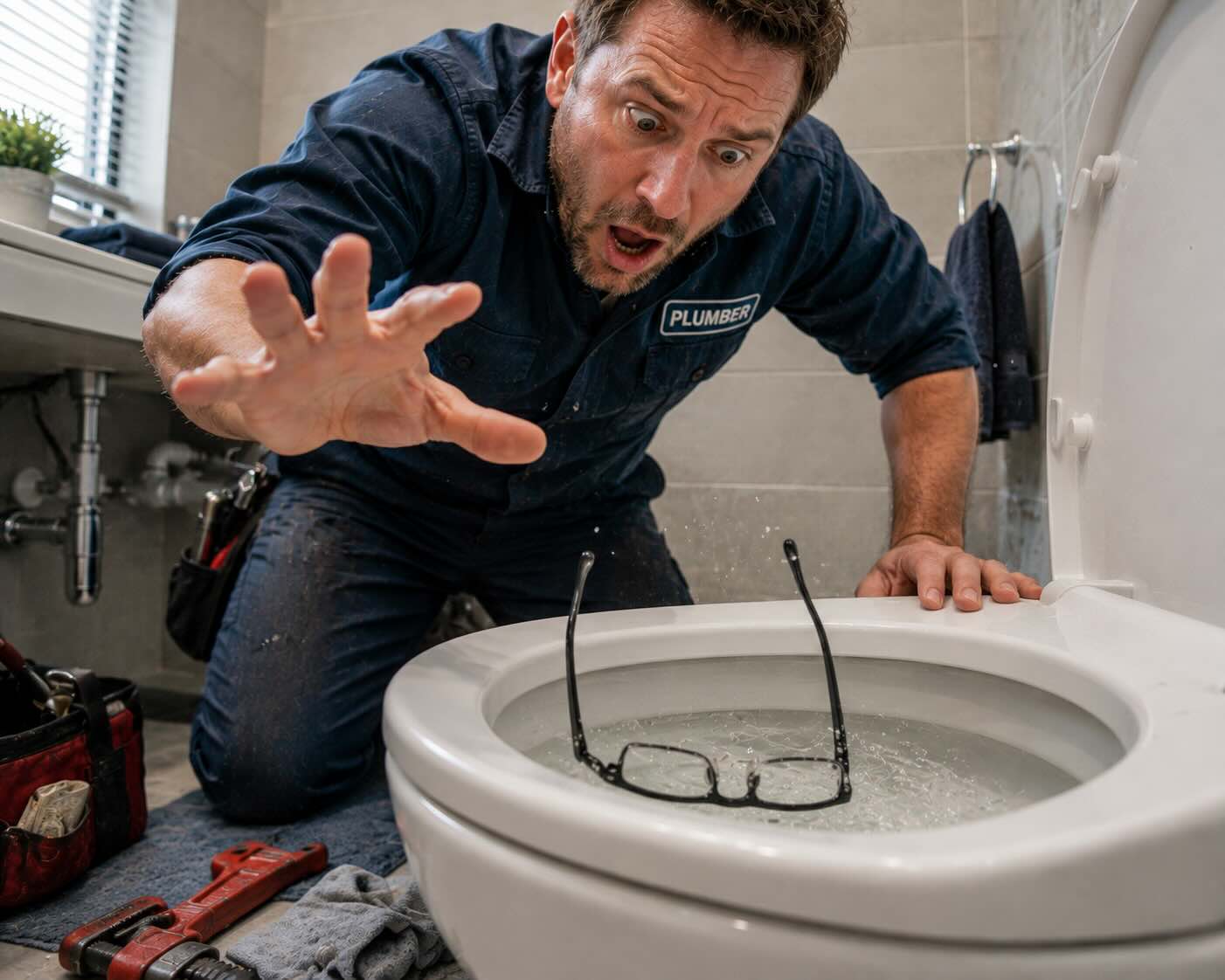
Electricians, builders, plumbers, landscapers and other tradespeople often work in dusty, windy or physically demanding environments where glasses and contact lenses may become inconvenient. In these professions vision correction for active lifestyles must be considered.
Assessment may consider:
- protective eye equipment
- dust exposure
- dry eye symptoms
- working at different distances
- outdoor glare
- physical activity
Emergency services:
Police officers, firefighters, paramedics & defence personnel
Police officers, firefighters, paramedics and defence personnel frequently work in rapidly changing environments where reliable vision is essential.
Visual considerations may include:
- low-light performance
- night driving
- peripheral awareness
- protective eyewear
- rapid visual transitions
- outdoor conditions
Reducing dependence on glasses may improve convenience in some situations, but recommendations are always individualised.
Enjoy a smoother day with fewer interruptions
Once vision is better supported, everyday activities may feel more natural and less interrupted. For instance, reading messages, exercising, travelling, driving or going out in the evening may become easier when glasses and contact lenses are less central to your day.
However, results vary from person to person. Therefore, your surgeon will assess your eyes carefully and explain what level of improvement is realistic for you.
Understanding Visual Performance
When your eyesight aligns with your goals and lifestyle, you may feel more assured in both professional and personal situations. Clearer unaided vision can give you one less thing to manage each day.
For this reason, choosing to care for your eyes is a proactive decision. It can support confidence, independence and comfort, provided the treatment is appropriate for your eyes.
Vision Correction for Active Lifestyles: Sport & Performance
Sport places unique demands on vision.
Whether you are playing elite cricket, competing in a triathlon, enjoying a weekend round of golf or simply coaching your children’s football team, your eyes are constantly processing information that influences your performance.
For many people, the goal of vision correction is not simply to reduce dependence on glasses or contact lenses. It is to see comfortably, react confidently and perform naturally without the practical limitations that glasses or contact lenses can sometimes create.
Different sports place different demands on the visual system. Some rely on rapid reactions, others on precise depth perception, while many require excellent contrast sensitivity, peripheral awareness and comfortable vision in changing light conditions.
Our role is to understand not only your prescription, but also how you use your vision during training, competition and everyday life.
Understanding Visual Performance
Good sporting vision involves much more than reading the smallest letters on an eye chart.
Depending on the activity, visual performance may involve:
- accurate depth perception
- rapid visual reaction time
- peripheral awareness
- contrast sensitivity
- tracking moving objects
- comfortable vision in bright sunlight or low light
- stable vision throughout prolonged activity
These factors may influence both your suitability for treatment and which vision correction option is most appropriate.
Experience Working with Elite Sport
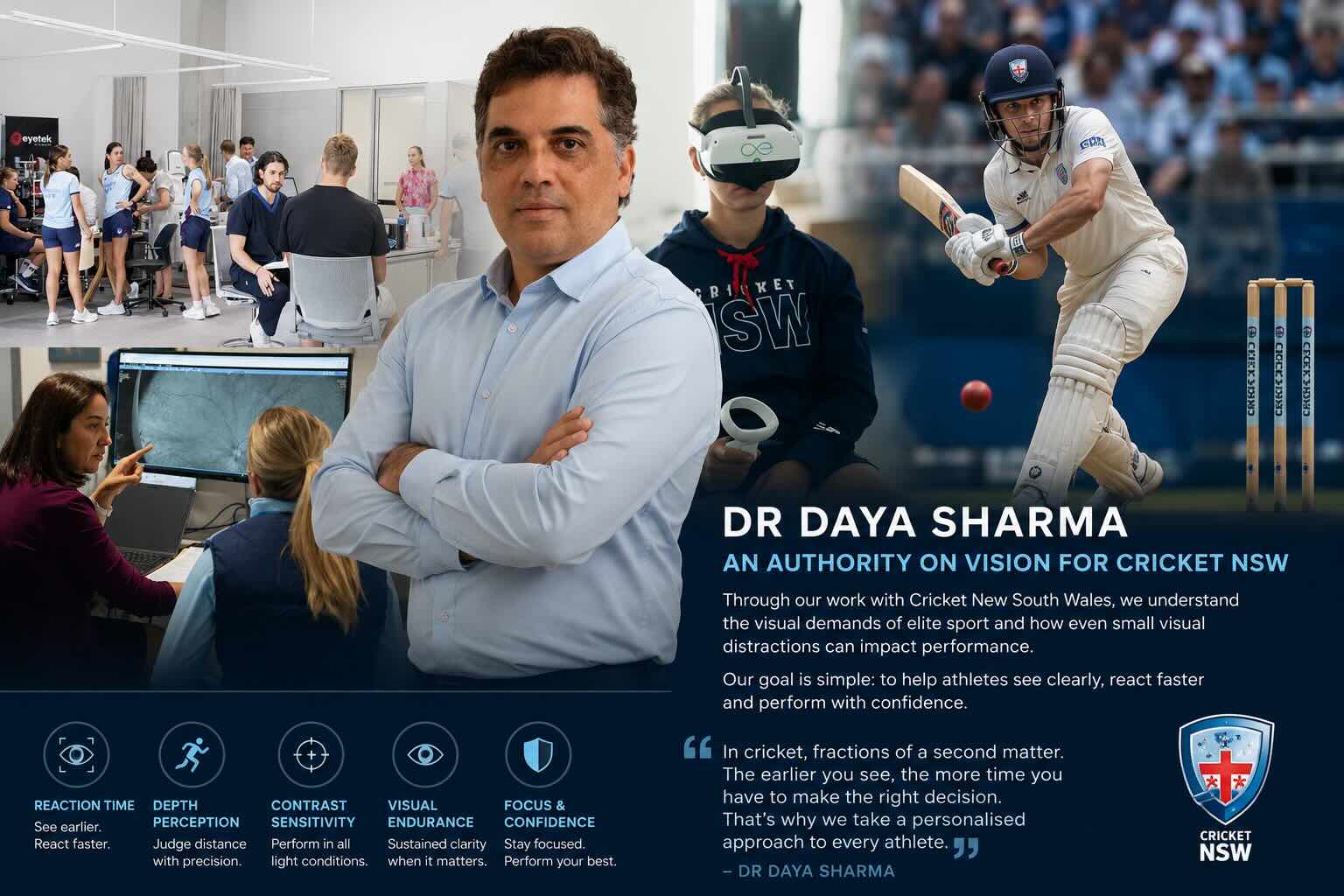
Dr Daya Sharma has worked with elite athletes through his involvement with Cricket New South Wales, where understanding visual performance formed an important part of supporting high-level sporting demands.
Every Sport Has Different Visual Demands
Explore how laser eye surgery can improve everyday life
Many people report greater comfort and confidence when their vision better supports their lifestyle

Feel calmer, more confident, and supported in your day
Blurred or changing vision can interrupt focus and increase stress, especially at work or in busy environments. It may even make you feel older than you are. By booking an eye assessment, you can learn what’s happening and explore treatment options that may better support your lifestyle. Some people describe feeling more comfortable, capable, and reassured once they have a clear plan in place for their vision and long-term eye health.
Enjoy a smoother day with fewer interruptions
Many people find that once their vision is better supported, everyday activities may feel more natural and less interrupted. Tasks like reading your messages, exercising, or going out in the evening may become easier and more enjoyable. With improved visual comfort, you may be able to focus on what matters most, staying active, productive, and fully present from morning to night.

Explore how laser eye surgery can improve everyday life
Many people report greater comfort and confidence when their vision better supports their lifestyle


Feel calmer, more confident, and supported in your day
Blurred or changing vision can interrupt your concentration and make everyday activities more difficult than they should be, particularly at work or in busy environments. It may also affect your confidence, comfort and independence in ways that gradually become part of daily life.
The first step is understanding why your vision has changed. By booking a comprehensive eye assessment, you can identify the underlying cause of your blurred vision and explore the options that may be appropriate for your eyes and lifestyle.
More importantly, the goal is not simply to stop wearing glasses.
Instead, it is to improve the way your vision supports your everyday life while protecting your long-term eye health. With a clearer understanding of your options, many people feel more confident and reassured knowing they have a personalised plan that aligns with both their visual goals and the long-term health of their eyes.

Enjoy a smoother day with fewer interruptions
Many people find that once their vision is better supported, everyday activities feel more natural and less interrupted. Whether you’re reading a message on your phone, exercising, driving at night or enjoying time with family and friends, relying less on glasses or contact lenses may make these moments simpler and more convenient.
At the same time, the goal is not simply to reduce dependence on glasses. It is to help your vision work comfortably in the situations that matter most to you.
Ultimately, the most appropriate vision correction option is the one that supports your lifestyle while protecting the long-term health of your eyes.

3 simple steps to clearer vision without glasses
We make the process easy, from your first question to life after treatment

STEP 1: START THE CONVERSATION
Not everyone is suitable for vision correction. Your first step is to find out if it could work for you. Call our friendly team or use our online calendar to book an appointment.
STEP 2: WE’LL MEET
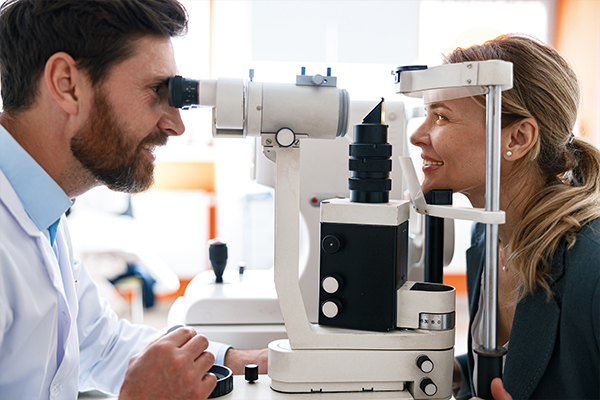
At your appointment, we’ll check your eyes, answer your questions, and explain which treatment options may suit your vision and lifestyle. You’ll leave with a clear understanding of your next step.

STEP 3: ENJOY LIFE
After treatment, many people are surprised by how quickly their daily life changes. Simple things, like exercising, working, or travelling, often feel easier without glasses or contact lenses.

Learn how laser vision correction may improve your everyday life
Get clear, expert answers to common questions about this treatment and how it may help reduce your reliance on glasses or contacts
Do glasses and contacts make everyday life harder than it should be?
If so, you have the option to explore vision correction

You’re constantly working around your glasses
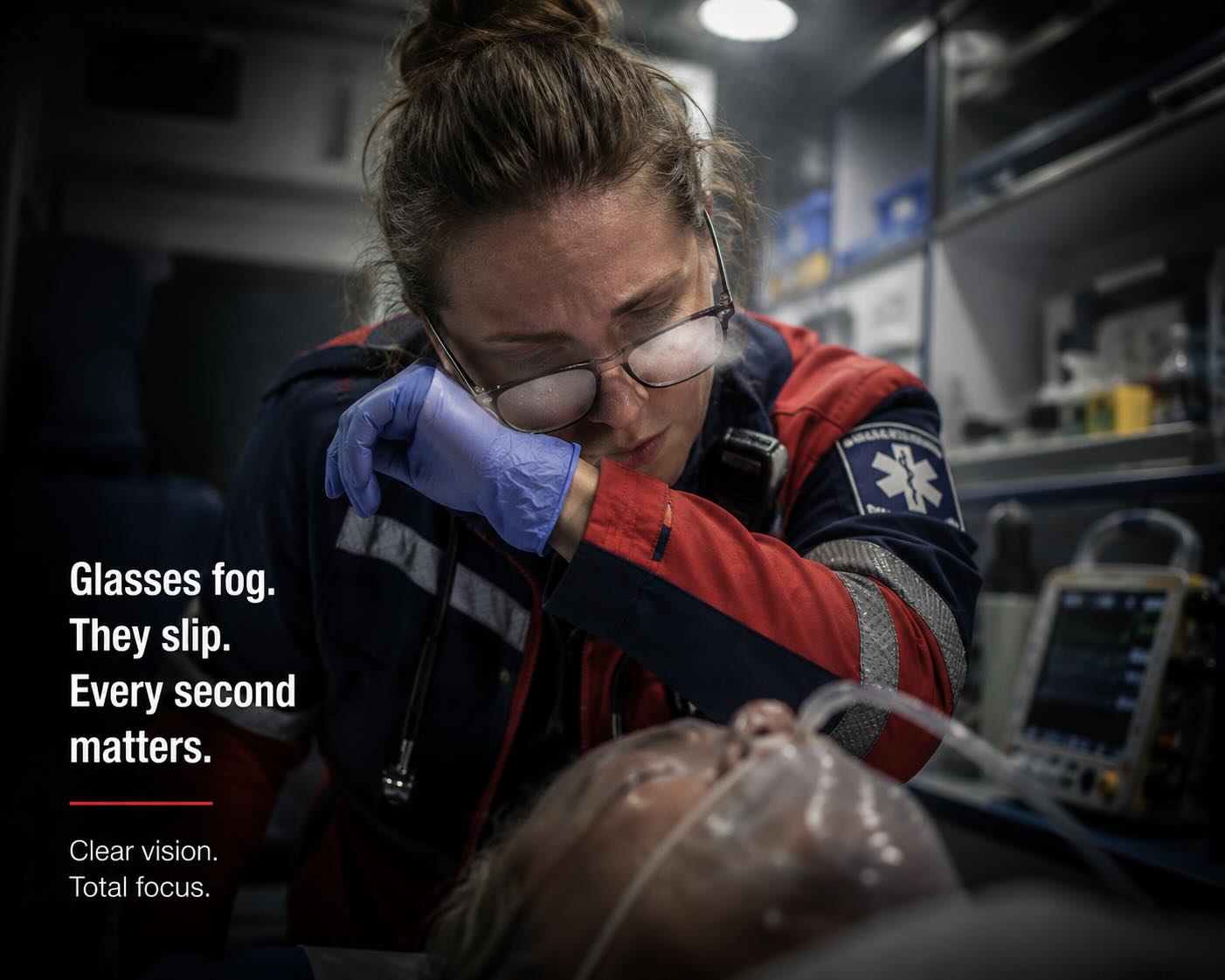
From struggling to find them first thing in the morning to pushing them back up during workouts, glasses get in the way of your day. They fog up, fall off, don’t fit under goggles, and make simple things, like showering or putting on mascara, more annoying than they should be. Booking an appointment can help you learn whether vision correction may be an option for you and how it could reduce daily inconvenience

You feel held back by the inconvenience of contacts
If your lenses feel dry, irritating, or risky, especially with sport, swimming, or beach holidays, you’re not alone. Many put up with the cost, cleaning, and fear of losing a lens mid-activity because they don’t know there’s another option. An appointment is the first step to finding out whether vision correction could reduce your dependence on contact lenses.

Simple moments turn into small daily struggles
Not seeing clearly in the shower, guessing which bottle is shampoo, missing the golf ball after you hit it, or fumbling with ski goggles over glasses, these moments add up. They can make you feel restricted, annoyed, and older than you are. By booking an appointment you can explore whether vision correction may offer a lifestyle with less reliance on glasses or contacts.

Affiliations and memberships
We are proud to be a part of these professional bodies




Academic resources on laser eye surgery
Learn more from authoritative clinical publications. These links will take you off our website

Hi, I’m Dr Shanel Sharma
I’m an ophthalmologist with subspecialty training in paediatric eye conditions, strabismus, medical retina and general ophthalmology from leading hospitals in Sydney and London, including Moorfields Eye Hospital. I hold a Fellowship with RANZCO and have published widely in peer-reviewed journals. My focus is providing careful, individualised care using evidence-based treatments. I’m accredited to treat a range of conditions and perform procedures including intravitreal injections, strabismus surgery and botulinum toxin treatments. I always aim to make the process clear, calm and supportive.

Hi, I’m Dr Daya Sharma
I’m a cataract, corneal and refractive surgeon with subspecialty training from Moorfields Eye Hospital in London and Sydney Eye Hospital. I perform laser vision correction procedures, refractive lens surgery, and advanced cataract surgery using the latest diagnostic and surgical technology. My work is focused on helping people reduce their dependence on glasses and improve their quality of vision at all distances. I’m actively involved in research, publication and surgical education, and I take pride in offering honest, thorough guidance to every patient. My approach is personal, careful and always tailored to individual needs and lifestyles.