

Vision Is Part of Performance
Whether you compete at an elite level, enjoy weekend sport or simply lead an active lifestyle, your vision influences almost every movement you make.
Every catch, every putt, every serve and every decision begins with visual information.
The ability to judge distance, track movement, recognise contrast and react quickly all depend on the way your eyes gather information and how your brain interprets it.
For some people, reducing dependence on glasses or contact lenses is about convenience.
For others, it is about allowing their vision to better support the activities they enjoy most.
Our role is to understand not only your prescription, but also the visual demands of your sport, occupation and lifestyle before recommending the most appropriate vision correction option.
At a Glance
Athletes and active people commonly ask:
- Can vision correction help me during sport?
- Is LASIK suitable for athletes?
- Which procedure is most appropriate for my sport?
- Can I swim or sail without glasses?
- How soon can I return to training?
- Does my sport influence which procedure is recommended?
The answer depends on much more than your prescription.
When planning vision correction we consider:
- your eye health
- your prescription
- your sport
- your occupation
- your visual goals
- your age
- your future visual needs
- your long-term eye health
Why Vision Matters in Sport
Good sporting performance depends on much more than reading the smallest letters on an eye chart.
Whether you are batting against a fast bowler, lining up a putt, returning a tennis serve or navigating changing sea conditions, your eyes are continuously gathering information that influences every decision you make.
Sporting vision combines many different aspects of visual function including:
- visual clarity
- depth perception
- contrast sensitivity
- peripheral awareness
- comfortable vision
- visual tracking
- hand-eye coordination
- visual decision-making
Different sports place different demands on each of these abilities.
That is one of the reasons every athlete deserves an individual assessment rather than a one-size-fits-all recommendation.
Every Athlete Uses Their Vision Differently
Two people may have exactly the same prescription and yet receive different recommendations.
Why?
Because they use their vision differently.
A competitive sailor constantly monitors wind shifts, waves and sail trim.
A golfer relies on distance judgement, contrast and reading subtle changes across the green.
A tennis player tracks a rapidly moving ball while reacting in fractions of a second.
A swimmer may simply want the freedom to train and compete without prescription goggles or contact lenses.
Understanding these differences helps us recommend the treatment that best supports your lifestyle rather than simply correcting your prescription.
Experience Supporting Elite Sport
One of the principles that guides our approach is that every athlete has different visual demands.
Dr Daya Sharma has worked with Cricket New South Wales (Cricket NSW) to better understand the visual requirements of elite cricket and the role comprehensive eye assessment can play in supporting high-performance sport.
In cricket, milliseconds matter.
The earlier a player can judge the line, length and movement of the ball, the more time they have to make an informed decision and execute the appropriate response.
Although not every patient is an elite athlete, every person depends on their vision to perform activities that matter to them.
The same principles apply whether you are competing at a high level, playing weekend sport or simply enjoying an active lifestyle.
It’s About More Than Seeing Clearly
Many people initially ask whether laser eye surgery will allow them to stop wearing glasses.
However, choosing the most appropriate vision correction option involves much more than deciding whether to reduce dependence on glasses or contact lenses.
We also consider:
- the visual demands of your sport
- environmental conditions
- dry eye
- recovery time
- future vision changes
- long-term eye health
- the activities that matter most to you
These discussions help ensure that any recommendation is based not only on your eyes, but also on the way you live.
Sports Vision Is About More Than the Eye Chart
Traditional vision testing measures how clearly you can read letters on an eye chart.
While this is important, sporting performance often depends on additional aspects of vision.
These may include:
- judging distance accurately
- recognising subtle differences in contrast
- maintaining comfortable vision in bright sunlight
- tracking fast-moving objects
- maintaining awareness of your surroundings
- making rapid visual decisions
Understanding these visual demands helps us recommend the most appropriate vision correction option for each individual.
Different Sports Place Different Demands on Vision
Every sport relies on vision, but not every sport relies on vision in the same way.
Some activities demand rapid reactions to fast-moving objects.
Others rely on accurate distance judgement, excellent contrast sensitivity or comfortable vision over many hours.
Understanding these differences helps us recommend the vision correction option that best supports the way you perform, rather than simply correcting your prescription.
Below are some examples of how visual demands differ between sports.
Cricket
Cricket is one of the most visually demanding sports.
Players must judge the speed, line and movement of the ball within fractions of a second before deciding how to respond.
Small improvements in the speed at which visual information is recognised may provide more time to make decisions during batting, catching and fielding.
Through Dr Shanel Sharma & Dr Daya Sharma‘s work with Cricket New South Wales (Cricket NSW), our team has gained valuable insight into the visual demands placed on elite cricket players and the importance of comprehensive eye assessment when supporting high-performance sport.
Although not every patient plays elite cricket, the same principle applies to everyone:
The way you use your vision should help guide the choice of vision correction.
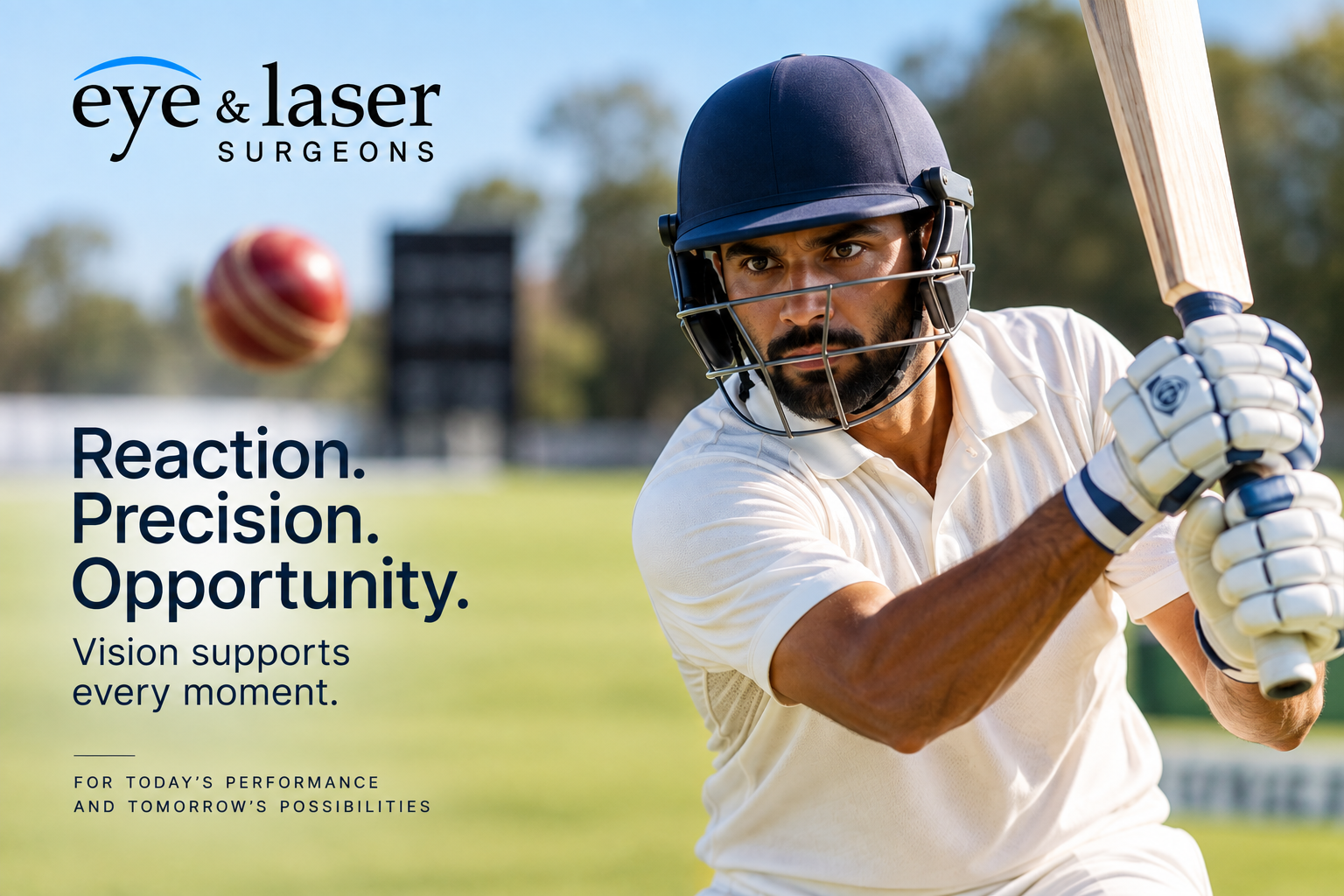
Clear vision plays an important role in cricket. Comprehensive vision assessment helps us understand the visual demands of the game and recommend the most appropriate vision correction option for each individual athlete.
→ Learn more about Vision Correction for Cricket Players
Tennis
Tennis combines speed, precision and rapid visual processing.
Players constantly track a fast-moving ball while judging depth, spin, speed and court position.
For some people, practical issues such as slipping or fogging glasses can become a distraction during play.
The decision to consider vision correction is therefore often about reducing these everyday interruptions rather than simply reducing dependence on glasses.
Different treatment options may be appropriate depending on your eyes, your prescription and the level of tennis you play.
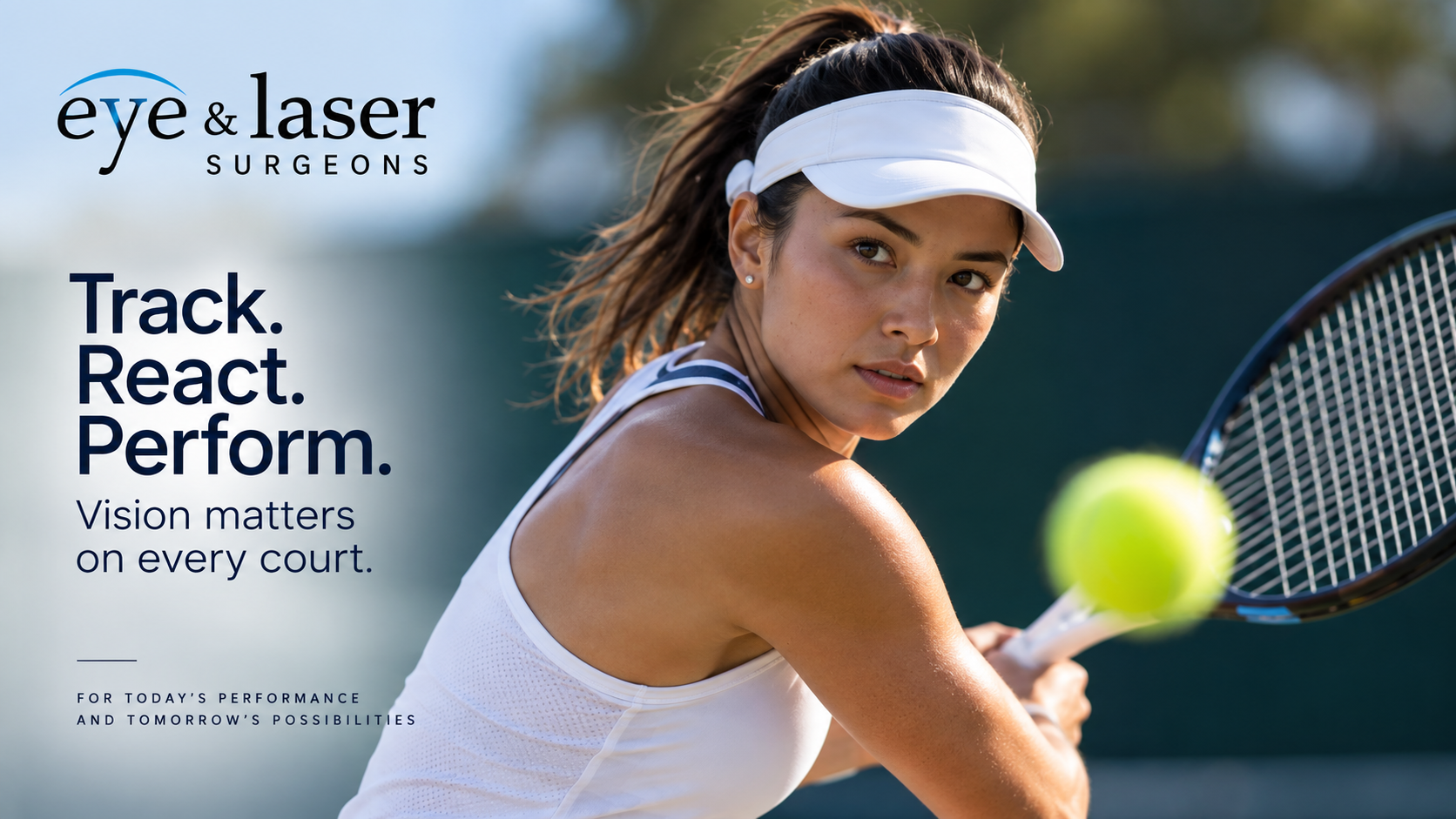
Vision matters on every court.
→ Learn more about Vision Correction for Tennis Players
Golf
Golf places unique demands on visual precision.
Reading the line of a putt, judging distance and maintaining good contrast sensitivity throughout changing light conditions all contribute to comfortable play.
Many golfers also appreciate reducing the inconvenience of changing between prescription sunglasses, distance glasses and reading glasses during a round.
Choosing the most appropriate vision correction option depends on your age, eye health and long-term visual goals.
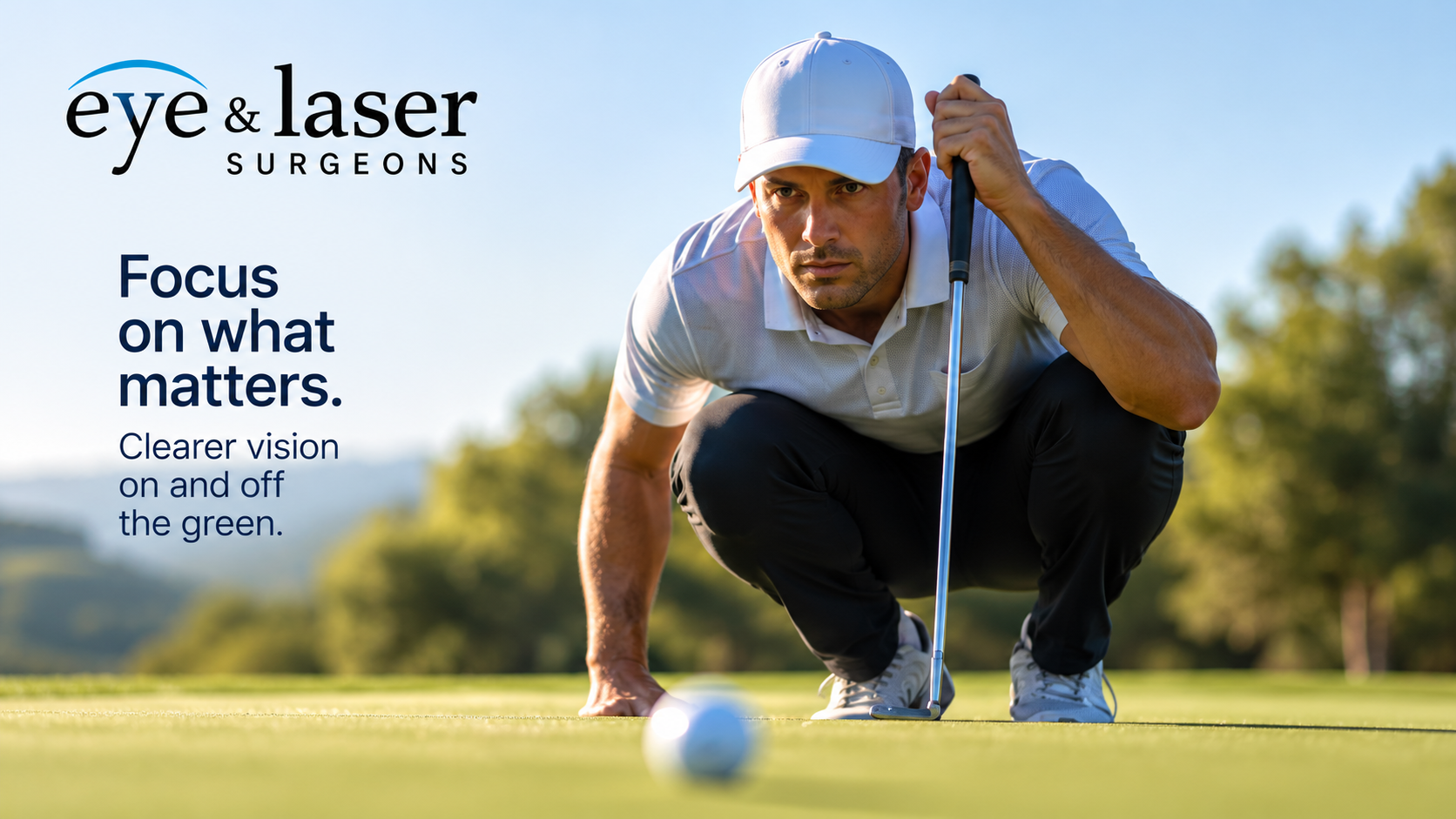
Golf relies on more than visual acuity alone. Depth perception, contrast sensitivity and comfortable vision all contribute to reading the green and judging distance throughout the round.
→ Learn more about Vision Correction for Golfers
Sailing & Yachting
Sailing combines changing light conditions, sea spray, wind and prolonged outdoor exposure.
Many sailors rely on clear distance vision to monitor wind shifts, sail trim, navigation markers and other vessels while simultaneously reading instruments at closer distances.
Glasses can become wet, fogged or covered with salt spray.
Contact lenses may also become uncomfortable in windy or dry environments.
Understanding these practical challenges helps guide recommendations that best support both your vision and your time on the water.
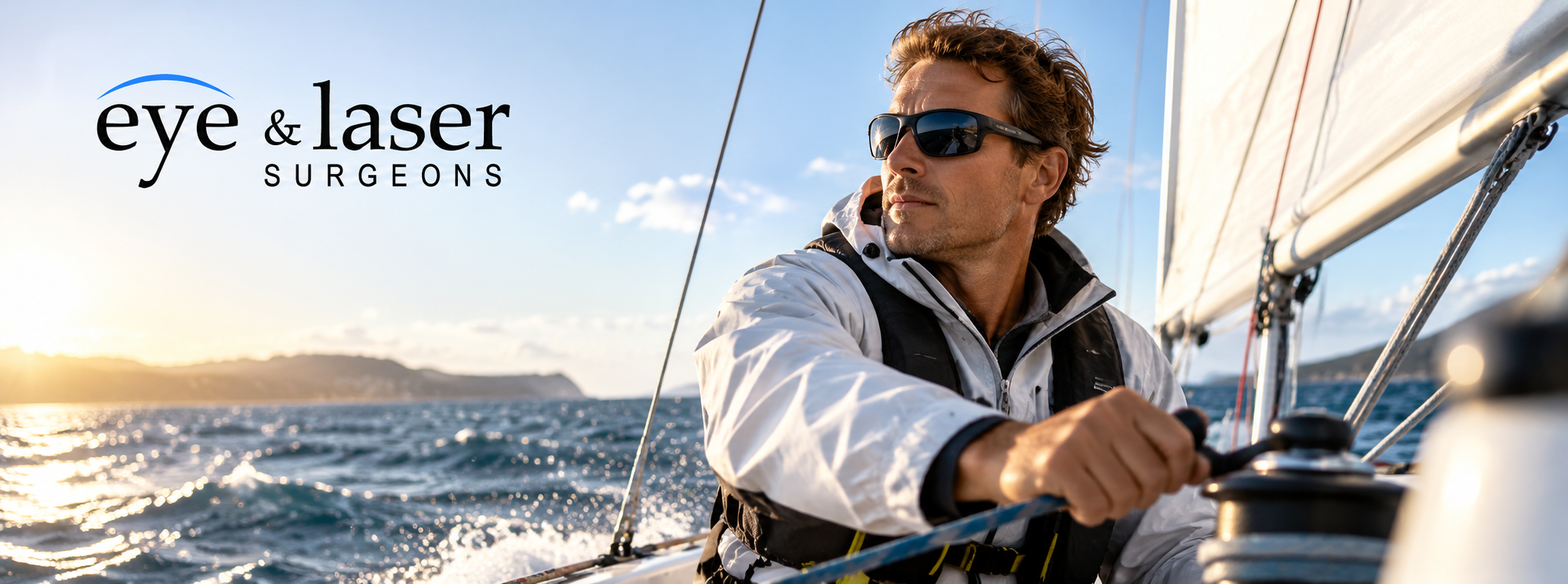
Sailing places unique visual demands on the eyes. Clear distance vision, contrast sensitivity and freedom from the practical limitations of glasses or contact lenses may help support an active life on the water for suitable candidates.
→ Learn more about Vision Correction for Sailors & Yachtsmen
Swimming & Triathlon
Swimming presents unique practical challenges for people who wear glasses or contact lenses.
Glasses cannot be worn in the pool.
Prescription goggles are helpful for some activities but may not suit every situation.
Many swimmers and triathletes seek greater freedom during training, racing and travel.
For suitable candidates, vision correction may reduce dependence on prescription goggles or contact lenses while supporting an active lifestyle.
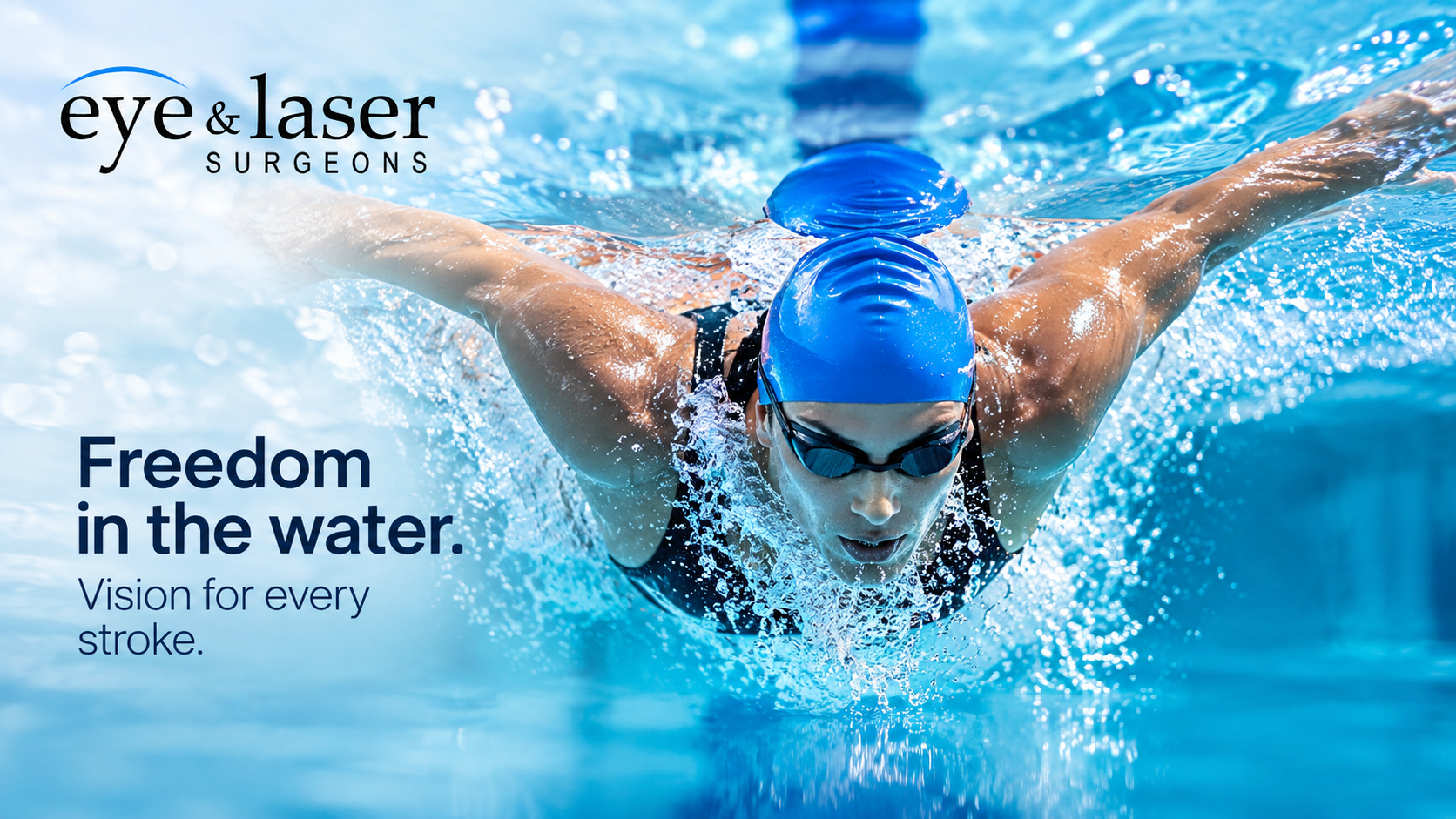
Swimming places unique visual demands on the eyes. For suitable candidates, personalised vision correction may reduce dependence on glasses or contact lenses, allowing greater freedom in and around the water.
→ Learn more about Vision Correction for Swimmers & Triathletes
Cycling
Cyclists often ride for extended periods in changing weather and light conditions.
Wind, rain, dust and sweat may all influence visual comfort.
Many riders appreciate reducing the practical inconvenience of managing glasses or contact lenses during long rides while continuing to wear protective cycling eyewear where appropriate.
Visual comfort, contrast sensitivity and long-term eye health all remain important considerations.

Cycling demands clear vision, rapid visual awareness and confidence in changing road and light conditions. Personalised vision correction may reduce dependence on glasses or contact lenses for suitable cyclists following comprehensive assessment.
→ Learn more about Vision Correction for Cyclists
Running
For runners, vision correction is often about convenience.
Sweat, movement and changing weather can all make glasses uncomfortable during training and competition.
Many runners appreciate being able to head out for a run without first thinking about prescription glasses or contact lenses.
The most appropriate treatment depends on your eyes, your age and your long-term visual goals.

Whether you’re training for a marathon or enjoying a morning run, clear, comfortable vision may help you focus on the experience rather than managing glasses or contact lenses. The most appropriate vision correction option depends on your individual eyes, lifestyle and long-term visual goals.
→ Learn more about Vision Correction for Runners
Contact Sports
Sports involving physical contact create additional challenges for glasses and contact lenses.
For some athletes, reducing dependence on corrective lenses may improve convenience and confidence during training and competition.
Return to contact sport always depends on the type of procedure performed, healing and individual recovery.
These considerations are discussed carefully during your assessment.
Contact sports place unique demands on vision. Personalised vision correction may reduce dependence on glasses or contact lenses for suitable people while supporting an active lifestyle and long-term eye health.
→ Learn more about Vision Correction for Contact Sports
Every Athlete Is Different
Although every sport places different demands on vision, every athlete also has different goals.
Some patients simply want to exercise comfortably.
Others compete at national or international level.
Some prioritise convenience.
Others place greater importance on night vision or long-term eye health.
There is rarely one “best” procedure.
The most appropriate recommendation depends on understanding your eyes, your lifestyle and the activities that matter most to you.
Looking Beyond Performance
While many people initially consider vision correction to improve convenience during sport, our recommendations are never based on sport alone.
We also consider:
- your prescription
- corneal health
- tear film
- age
- future visual requirements
- occupation
- long-term eye health
These discussions help ensure that any treatment supports not only your performance today but also your vision for years to come.
Choosing the Most Appropriate Vision Correction Option
Every athlete is different.
Two people may play the same sport, have similar prescriptions and yet receive different recommendations.
Why?
Because choosing the most appropriate vision correction option involves much more than measuring your glasses prescription.
We consider:
- your eye health
- your prescription
- corneal shape and thickness
- tear film quality
- age
- long-term vision
- occupation
- sporting activities
- visual goals
- future eye health
Our role is to understand how you use your vision before recommending the option that best supports both your lifestyle and your long-term eye health.
Laser Vision Correction Is One Option
Many active people initially ask about laser eye surgery.
However, laser treatment is only one of several vision correction options.
Depending on your eyes and lifestyle, recommendations may include:
- LASIK
- SMILE
- PRK
- Implantable Contact Lens (ICL)
- Lens Replacement Surgery
- Continuing with glasses or contact lenses where appropriate
The most appropriate option depends on your individual circumstances following a comprehensive assessment.
Understanding Your Options
LASIK
LASIK is one of the most commonly performed forms of laser vision correction.
For suitable candidates, it may reduce dependence on glasses or contact lenses while providing relatively rapid visual recovery.
Many active people appreciate returning to normal daily activities soon after treatment, although recovery recommendations vary depending on the individual and the sport.
SMILE
SMILE is a minimally invasive laser procedure that may be appropriate for selected patients, particularly those with myopia and certain degrees of astigmatism.
Whether SMILE is the most appropriate option depends on your eyes, your prescription and your visual goals.
PRK
PRK remains an excellent option for some patients, particularly where corneal thickness or other individual factors influence treatment selection.
Although visual recovery is generally slower than LASIK, PRK may be the preferred procedure in selected situations.
Implantable Contact Lens (ICL)
For people with higher prescriptions or eyes that may not be suitable for laser treatment, Implantable Contact Lenses may provide another option.
ICL surgery does not reshape the cornea and may be appropriate for selected patients following assessment.
→ Learn more about Implantable Contact Lenses
Lens Replacement Surgery
As we age, the natural lens changes.
For some patients, particularly those developing presbyopia or early cataracts, Lens Replacement Surgery may provide a more appropriate long-term solution than laser treatment.
→ Learn more about Lens Replacement Surgery
Returning to Sport
One of the most common questions athletes ask is:
“When can I return to training?”
The answer depends on several factors including:
- the procedure performed
- healing
- the type of sport
- environmental conditions
- protective eyewear requirements
Swimming, contact sports and activities involving dust or water often require different recovery recommendations compared with walking, gym training or office work.
During your consultation we will explain when it is appropriate to safely return to your normal activities.
→ Learn more about Recovery After Vision Correction
Protecting Your Eyes During Sport
Vision correction is only one part of maintaining healthy eyes.
Many sports carry a risk of eye injury.
Protective eyewear remains important in many activities, particularly racquet sports, contact sports and occupations involving flying debris.
Even after successful vision correction, protecting your eyes remains essential.
Frequently Asked Questions
Can athletes have laser eye surgery?
Many athletes are suitable candidates for laser eye surgery. However, suitability depends on your eyes, prescription, eye health, the sport you play and your long-term visual goals.
Is LASIK the best option for athletes?
There is no single best procedure.
Depending on your eyes and lifestyle, LASIK, SMILE, PRK, Implantable Contact Lenses or Lens Replacement Surgery may each be appropriate for different people.
Will vision correction improve my sporting performance?
Vision correction aims to reduce dependence on glasses or contact lenses for suitable candidates.
The choice of treatment is based on your individual visual requirements, eye health and lifestyle. It should not be viewed as a guarantee of improved sporting performance.
Can I swim after laser eye surgery?
Swimming should be avoided for a period following treatment to allow appropriate healing and reduce the risk of infection.
Your surgeon will advise when it is safe to return to swimming based on the procedure performed and your recovery.
Can I play tennis after LASIK?
Most people return to tennis following recovery.
The timing depends on healing, the procedure performed and the level of competition.
Is vision correction suitable for sailors and yachtsmen?
Many sailors seek vision correction to reduce dependence on glasses or contact lenses in challenging outdoor environments.
The most appropriate option depends on your individual eyes, lifestyle and visual goals.
Does my sport influence which procedure is recommended?
Yes.
Different sports place different demands on vision.
Understanding those demands helps us recommend the option most appropriate for your eyes and the activities that matter most to you.
Related Guides
You may also find these resources helpful:
Vision Correction
Lifestyle
- Vision Correction for Work, Sport & Active Lifestyles
- Vision Correction for Pilots
- Vision Correction for Surgeons
- Vision Correction for Emergency Services
- Vision Correction for Tradies
Sports
- Vision Correction for Cricket Players
- Vision Correction for Tennis Players
- Vision Correction for Golfers
- Vision Correction for Sailors & Yachtsmen
- Vision Correction for Swimmers & Triathletes
- Vision Correction for Cyclists
- Vision Correction for Runners
- Vision Correction for Contact Sports
Your Vision Is Part of Your Performance
Whether you compete professionally, enjoy weekend sport or simply want greater freedom during an active lifestyle, choosing vision correction is about much more than reducing dependence on glasses.
It is about understanding how you use your vision, what activities matter most to you and which option best supports your long-term visual goals.
At Eye & Laser Surgeons, we believe every patient deserves to understand all appropriate options before making an informed decision.
Our role is to explain the benefits, limitations, risks and alternatives of each option so that together we can recommend the treatment that best supports your eyes, your lifestyle and your future.
Book a comprehensive Vision Correction Assessment to discuss your sporting activities, lifestyle and long-term visual goals with our team.
Vision Correction for Athletes: Key Points
If you’re an athlete or lead an active lifestyle, these are the most important things to remember:
- Different sports place different demands on vision.
- Good sporting vision involves more than reading an eye chart.
- The most appropriate vision correction option depends on your eyes, your sport and your lifestyle.
- LASIK, SMILE, PRK, Implantable Contact Lenses and Lens Replacement Surgery each have different indications.
- Comprehensive assessment is essential before recommending treatment.
- Protecting long-term eye health remains just as important as reducing dependence on glasses.